
Ghost roots hair gallery
Ghost roots hairinspiration
Ghost roots are a hair-coloring technique that places a deliberately contrasting shade at or near the roots, turning the root area into an intentional feature rather than ordinary regrowth.
Explore 45 visually reviewed looks by color, placement, section width, texture, and length to find a clear salon reference.

Reviewed visual collection
Ghost roots hair ideas by color.
Filter the gallery by root color, then compare the boundary, section width, base shade, texture, and viewing angle. Each photograph shows a different placement or styling decision.
Showing 45 looks
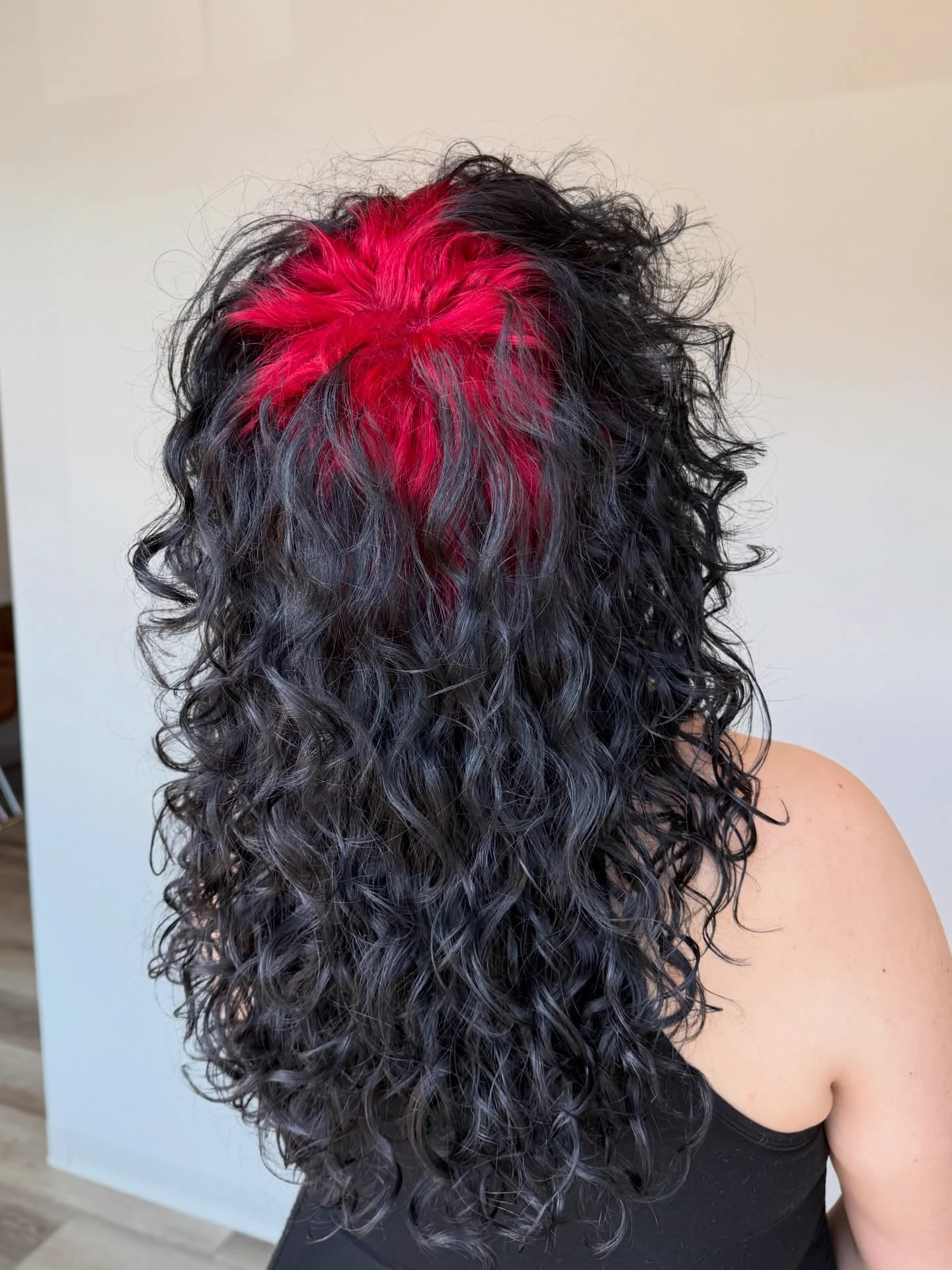
Crimson moving through long curls
The red begins at the crown, then appears between curl sections as the hair opens and moves. This shows why the same root placement can look compact at rest and more extensive once long curls separate.
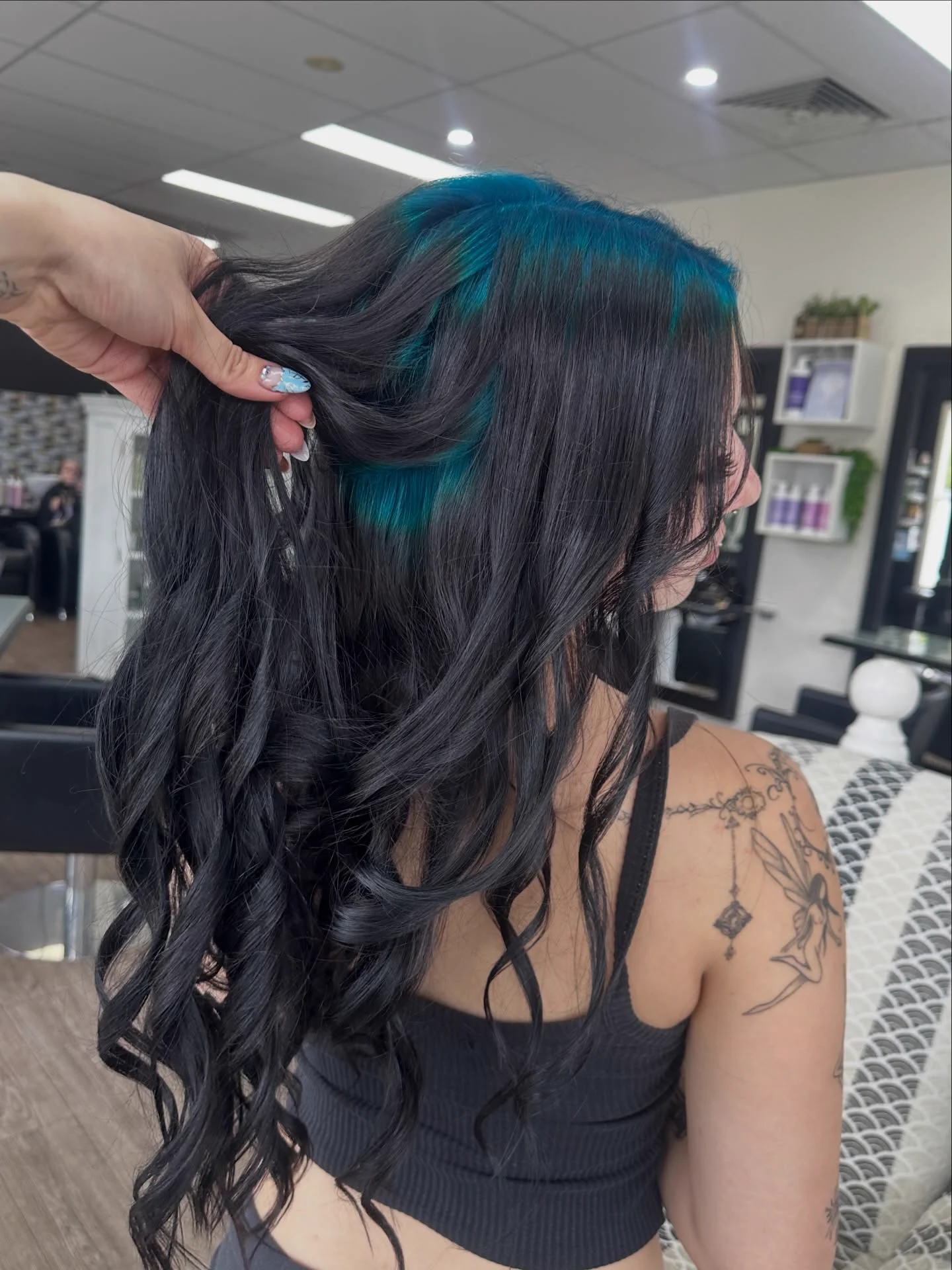
A teal halo beneath black waves
This placement can stay partly hidden when the top layer lies flat and form a bright ring when the hair is lifted. It suits someone who wants the option to conceal the color in a smooth style and reveal it through movement or half-up styling.
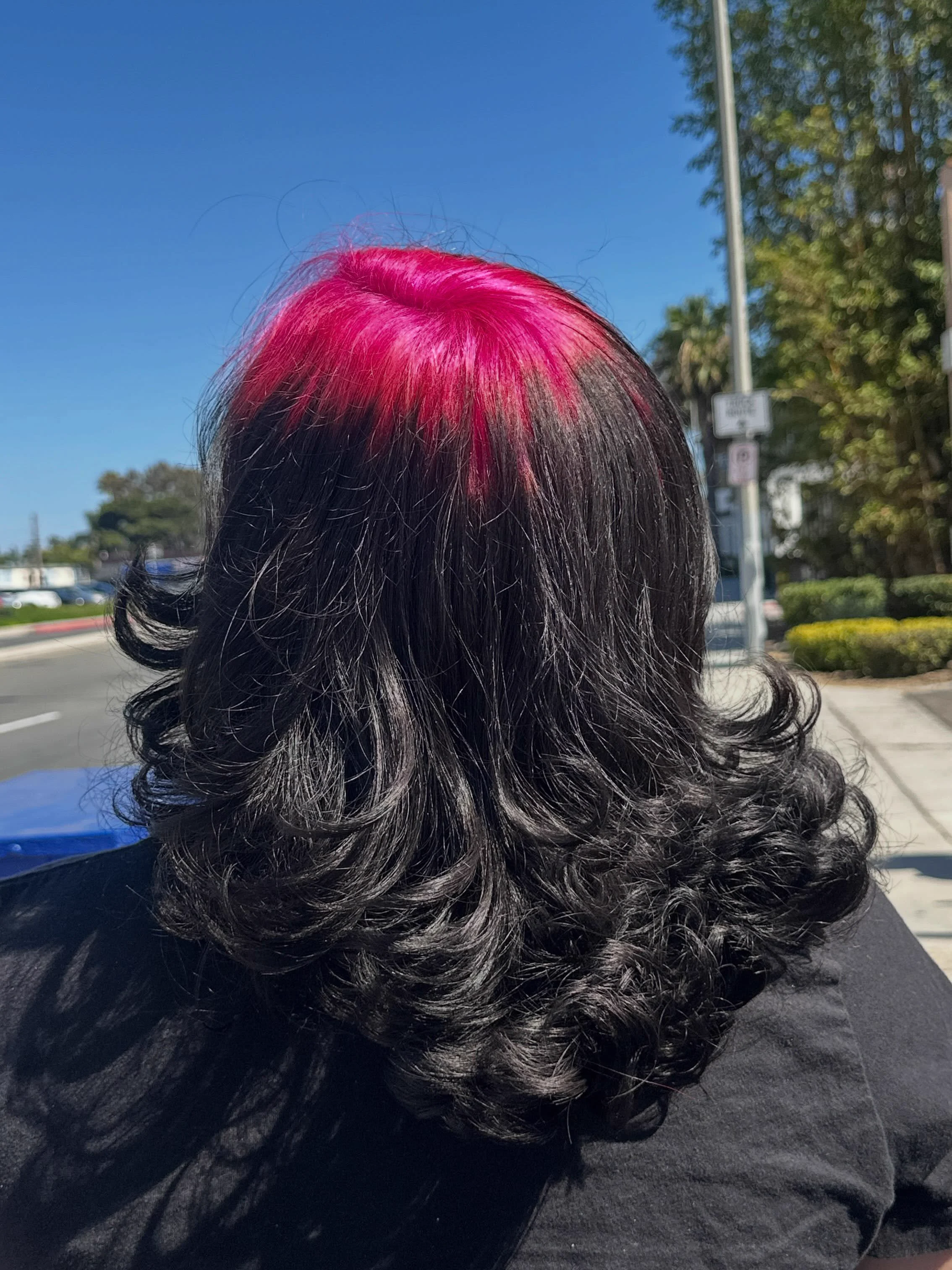
Pink across a full curly crown
The back view shows how a broad pink panel separates into individual curls instead of reading as one flat block. It is a useful reference for deciding how much dark hair should remain between the colored sections when the curls naturally divide.
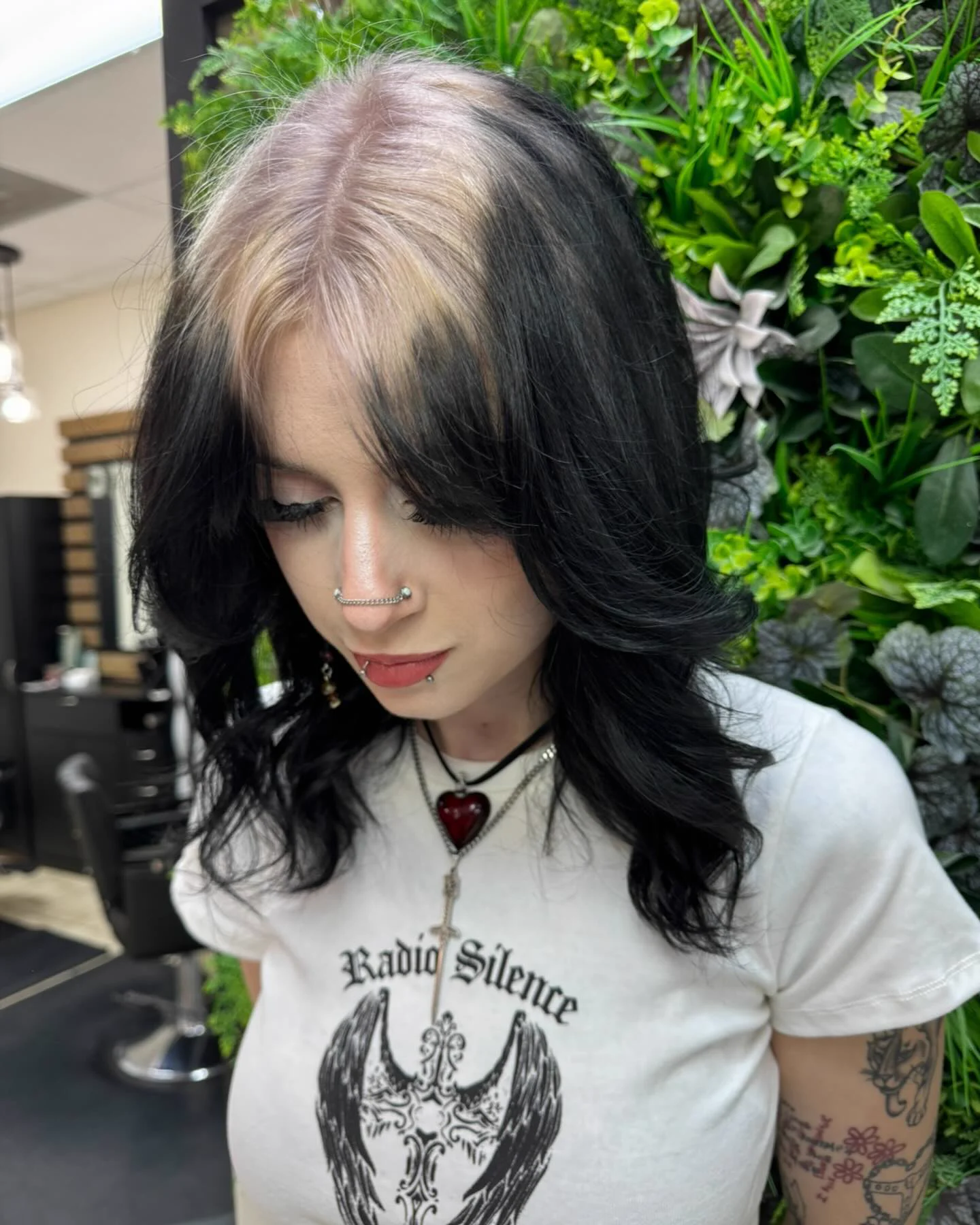
Platinum following a center part
A top-down angle makes the pale panel width and its clean boundary with the black waves easy to judge. The narrow shape keeps the effect centered, which helps distinguish a controlled root stripe from a broader split-color crown.
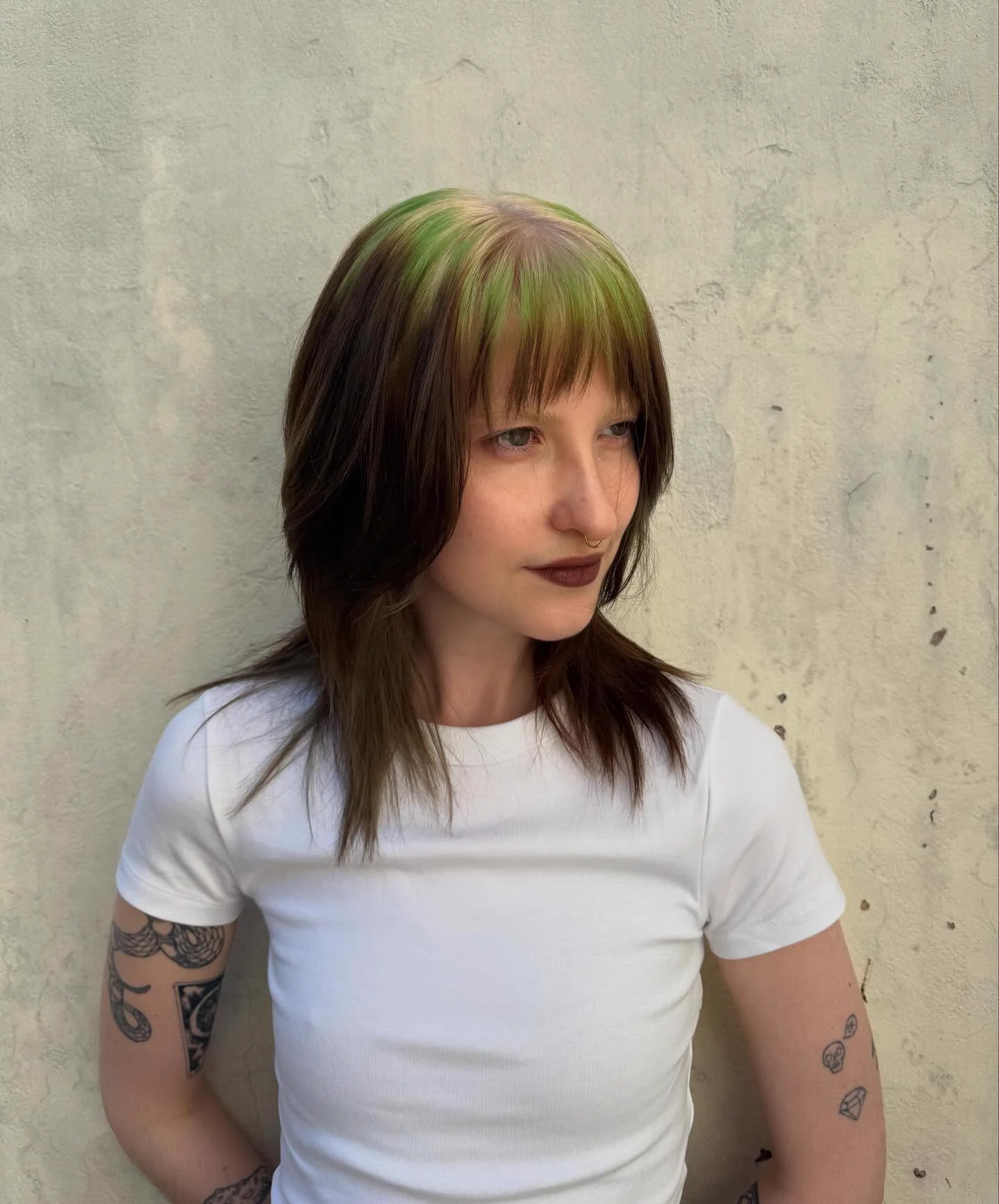
Green covering the top and fringe
This broader placement stays visible from the front because the green reaches through the crown and into the fringe roots. It is a higher-visibility option than a hidden panel and will remain obvious even when the hair is worn straight and undisturbed.
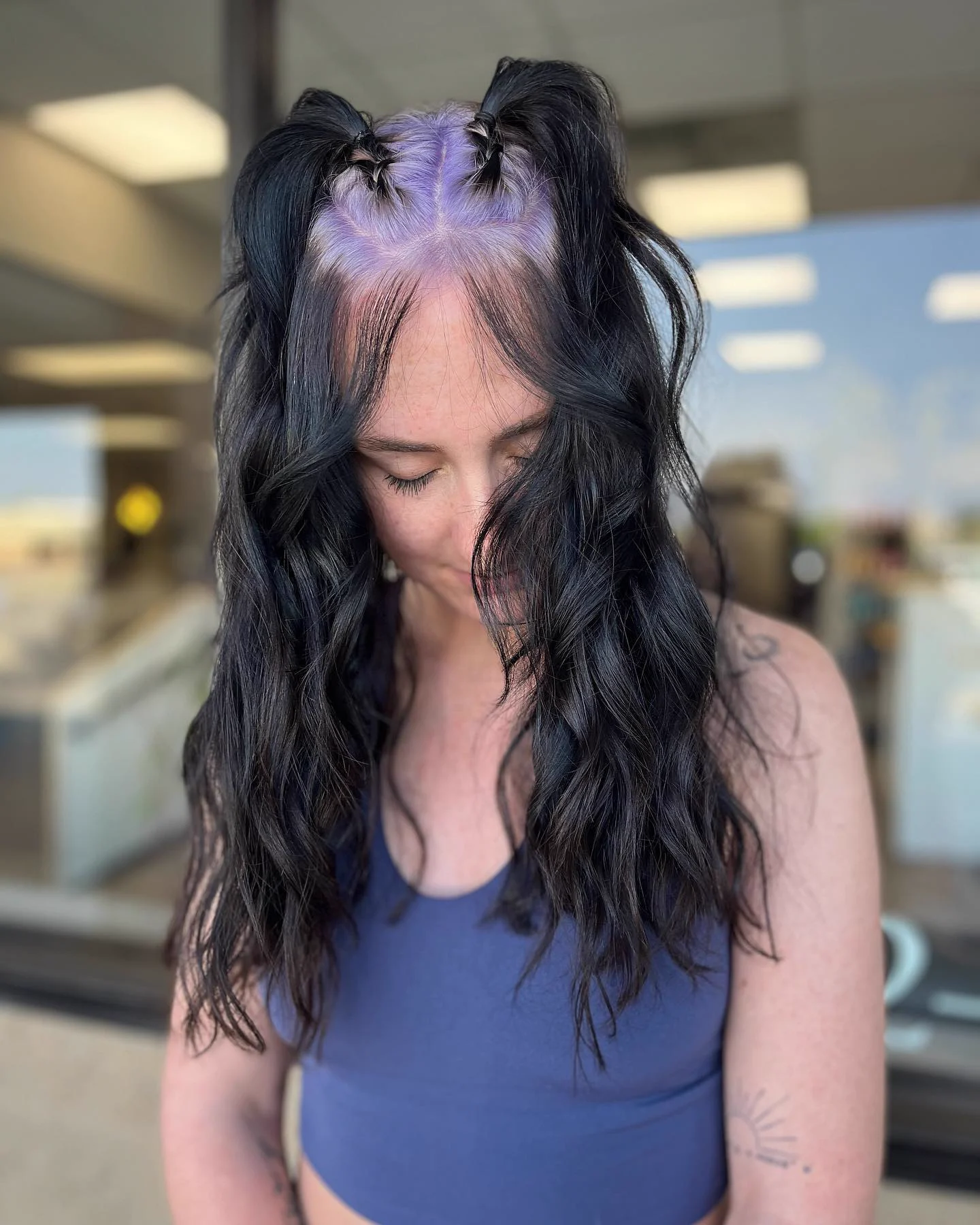
Purple paired around the part
Two violet sections frame the center line, keeping the contrast concentrated at the top rather than carrying it through every length. Their balanced width gives a colorist a clear reference for matching the two sides without creating a solid purple crown.
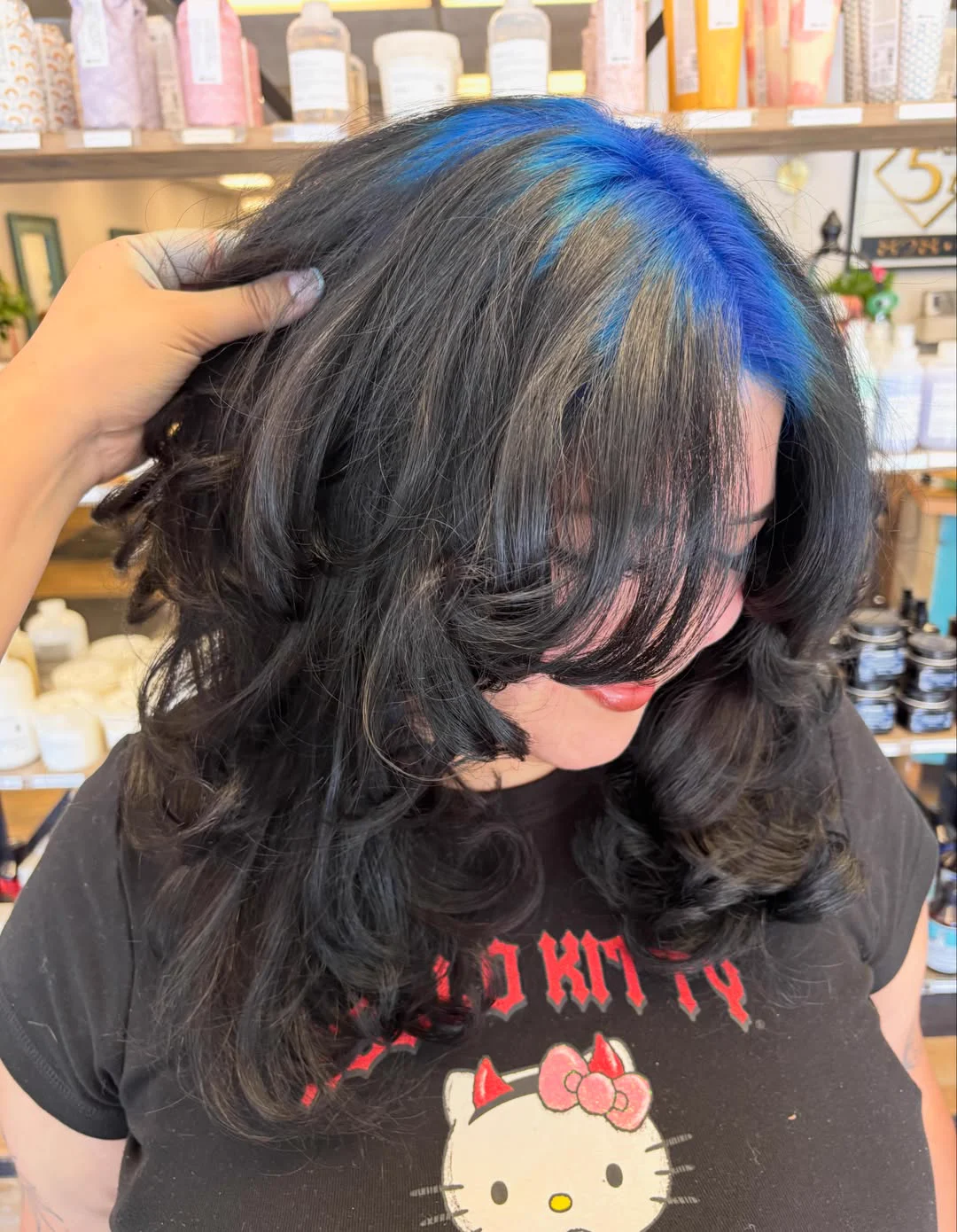
Electric blue swept from a side part
The blue follows the direction of the blowout, showing how an asymmetric part can change the entire silhouette. Because the section is weighted to one side, the result reads as movement and sweep rather than a centered stripe.
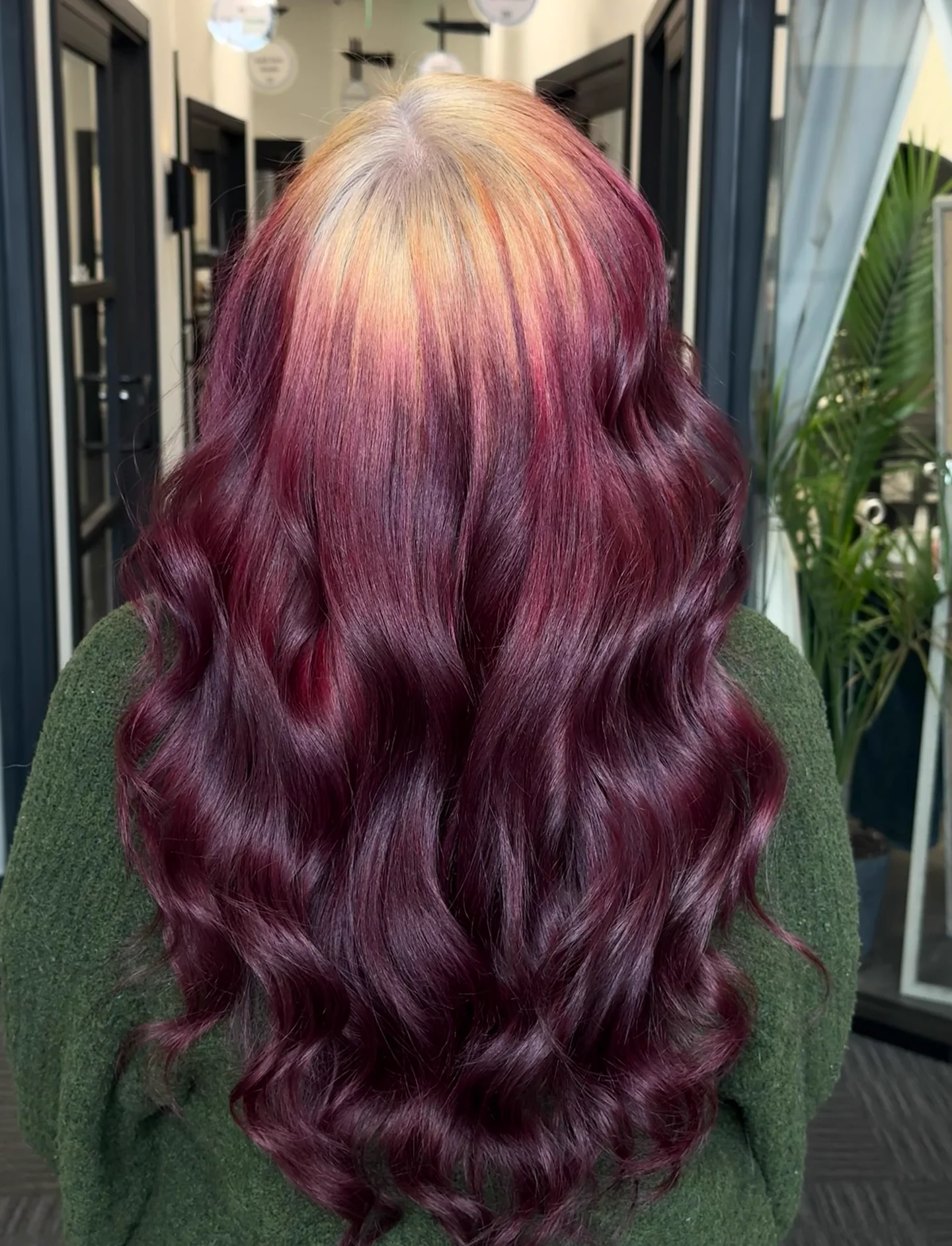
Blonde softened into red lengths
The pale crown is broad, but its diffused edge makes the change into the warm red lengths feel less graphic. This is a useful comparison for someone choosing between a crisp two-tone boundary and a softer transition that still keeps the roots visibly lighter.
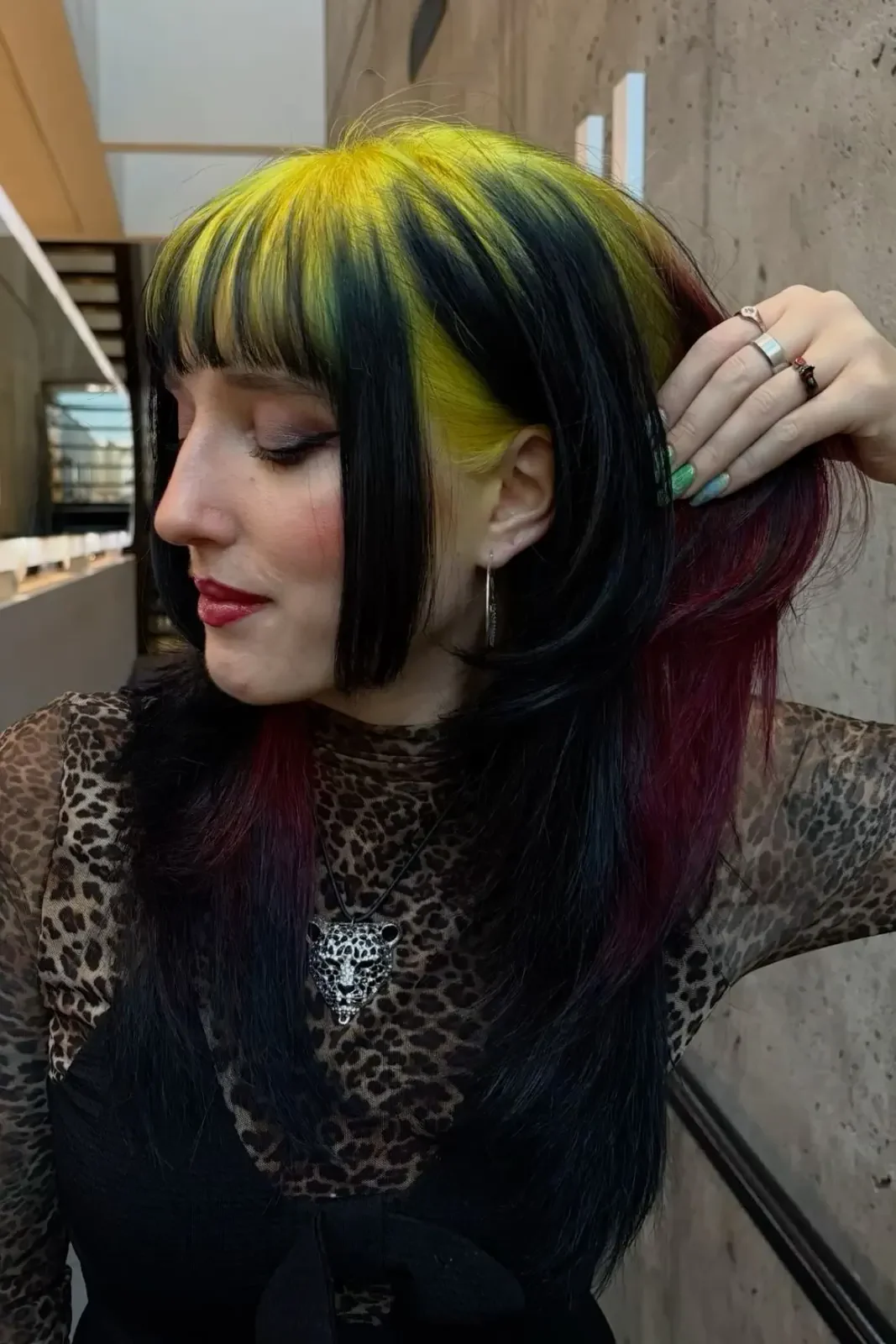
Neon yellow widening into side panels
The profile view shows that the yellow is wider than a center stripe and continues toward the side, producing a bolder graphic break. The extended panel stays visible when the hair turns away from the camera, unlike color limited to the part alone.
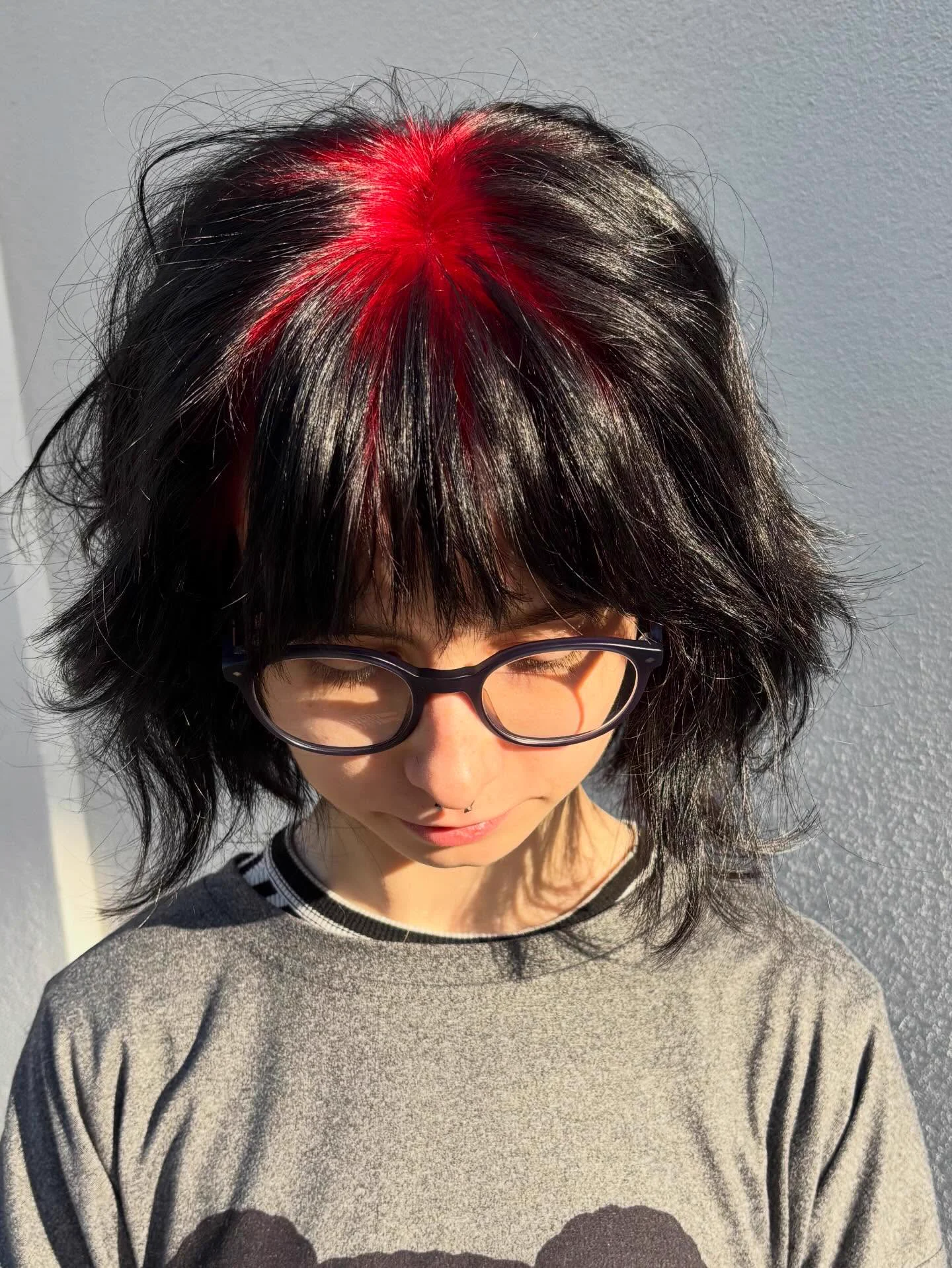
Red bursting from the center crown
The top view catches short red sections radiating from the part and reaching toward the fringe without covering the entire top. The tapered sections preserve black gaps between the red, creating a broken burst rather than a solid circular crown.
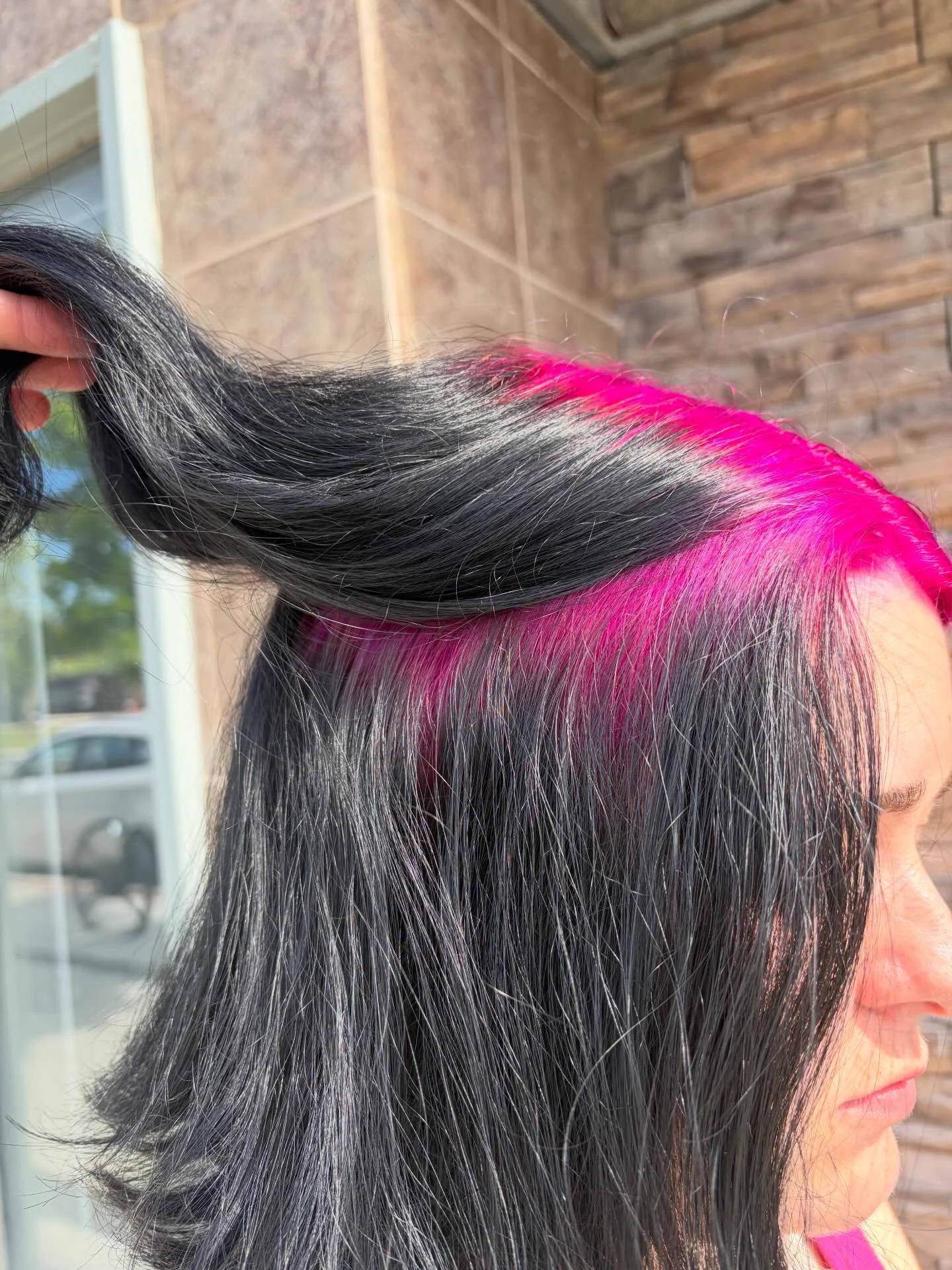
Hot pink exposed beneath a lifted side section
Lifting the black surface hair reveals a broad hot-pink underlayer running from the temple into the side roots. Worn down, much of the panel is covered; tucked or lifted, the saturated pink becomes a strong side accent.

Silver-white centered over a black shag
The pale center section follows the part and stops before covering the full crown, leaving the black side layers to frame the contrast. The layered cut repeatedly exposes the silver-white area, so a relatively narrow placement still reads clearly from the front.

Neon green covering a short split fringe
Neon green covers most of the visible top and front fringe, with black retained at the ends and side pieces. This is a high-coverage front placement rather than a narrow root accent, so it remains dominant even when the bob falls flat.
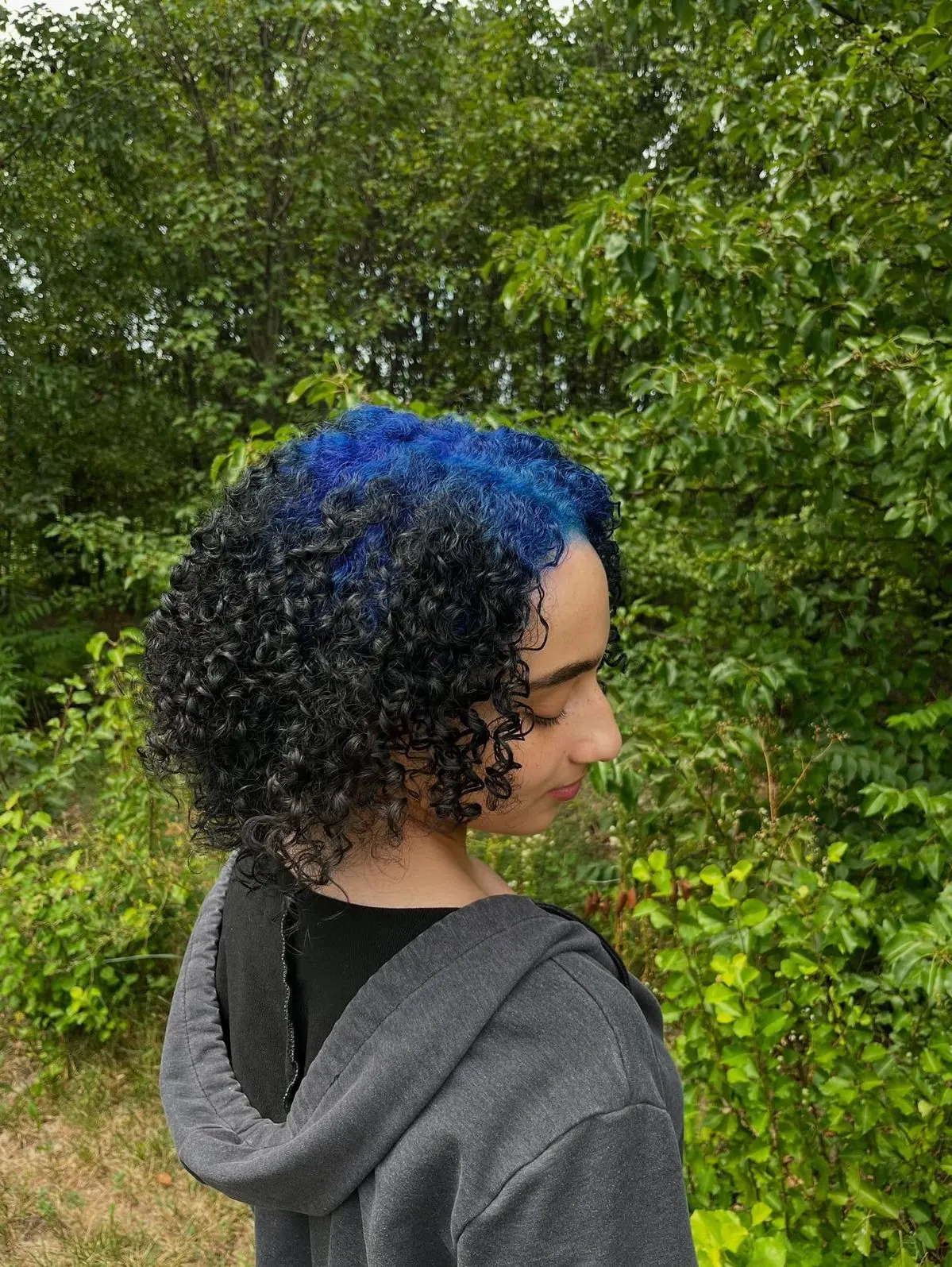
Cobalt blue covering the top of a curly bob
The side profile shows cobalt spreading across the upper curls before giving way to black around the lower sides and back. On this short shape, a broad top panel stays visible without requiring blue through every curl.
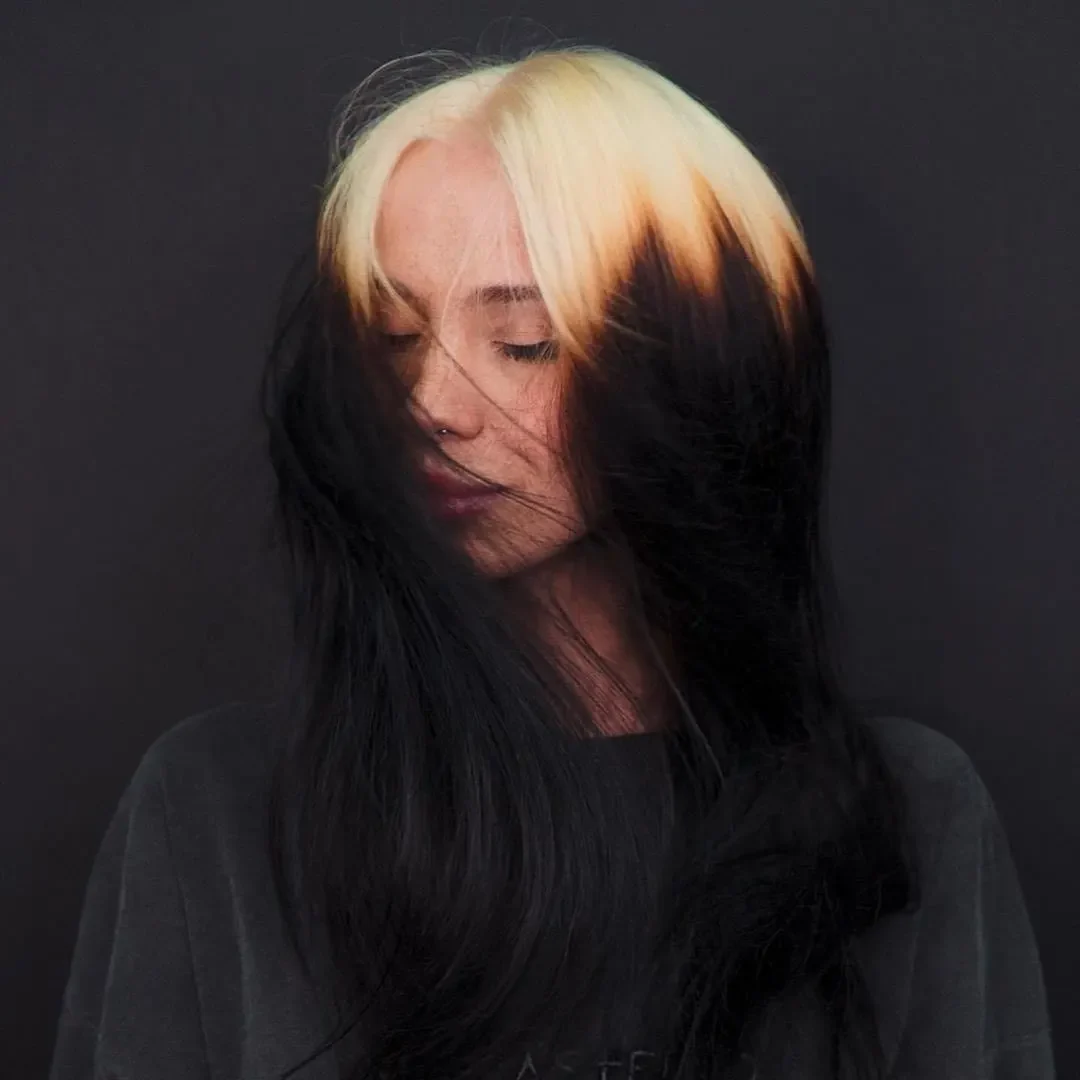
Blonde split broadly across the front crown
Blonde occupies a wide front section around the part, while black remains through the opposite crown and long lengths. The result is a bold face-brightening split that covers considerably more area than a narrow skunk stripe.
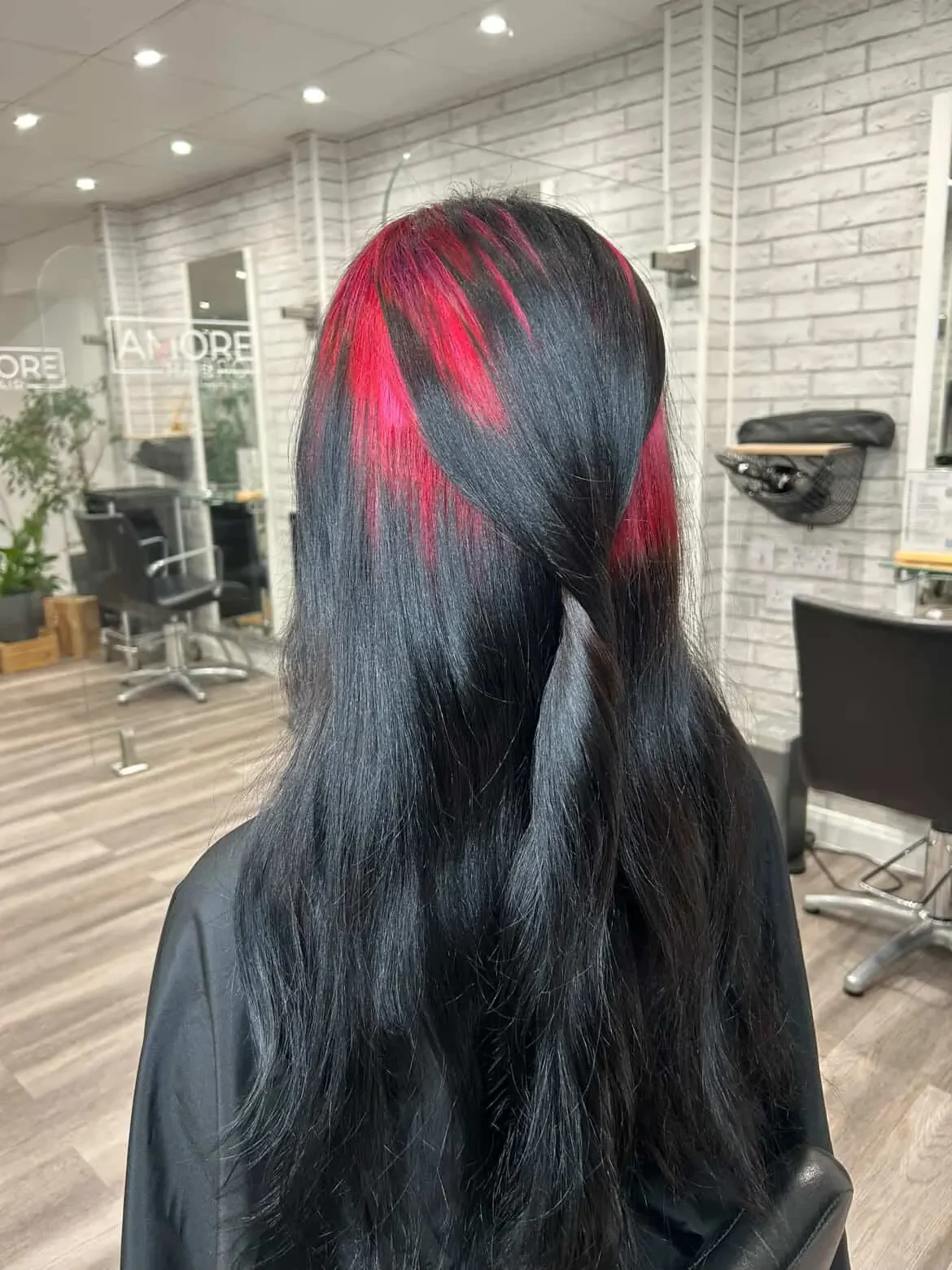
Red opening between soft black waves
From behind, the red top panel appears in several narrow paths as the waves separate rather than as one continuous block. This makes the placement useful for someone who wants the root color to change in intensity as the hair moves.
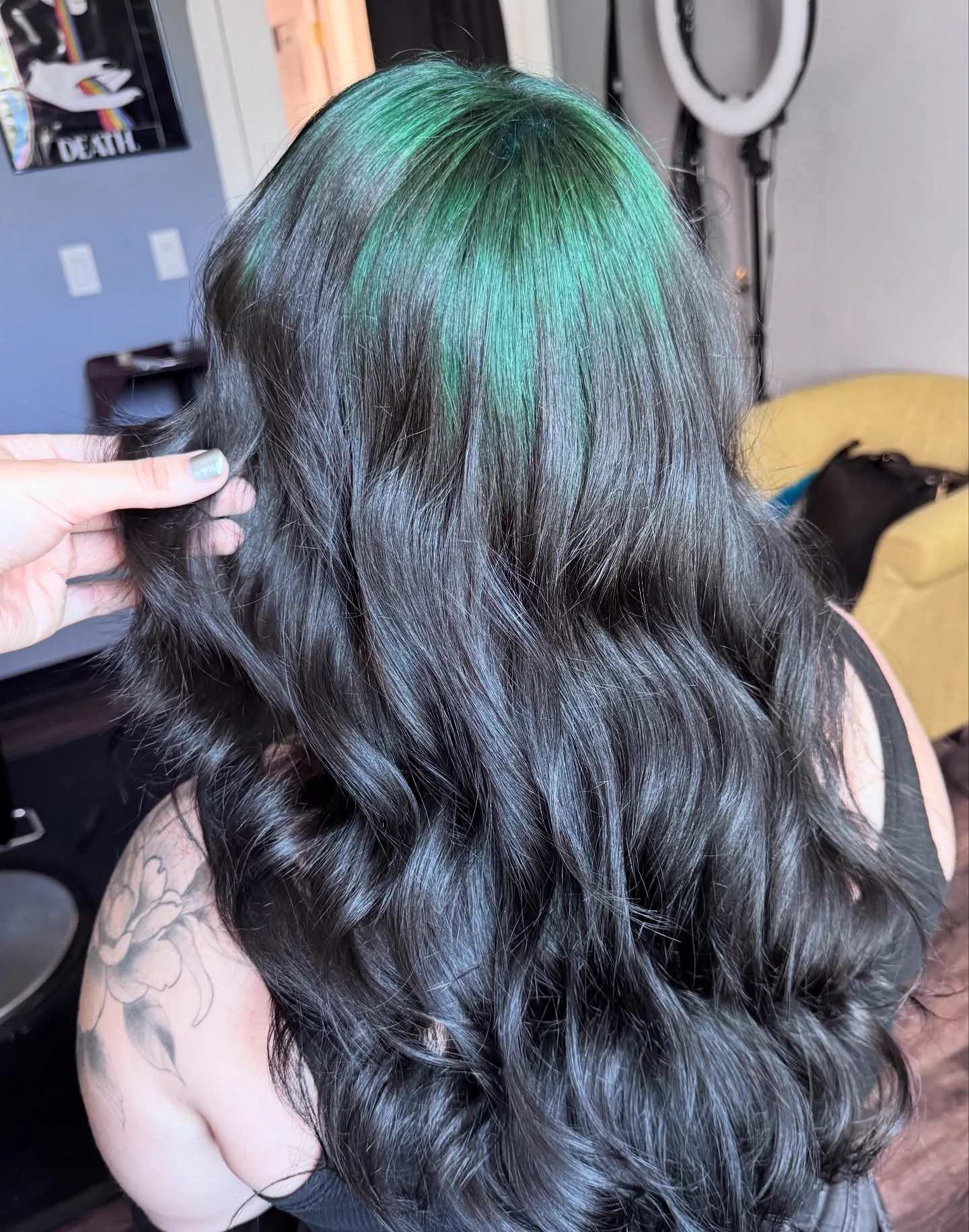
Teal spread across a broad back panel
The rear angle shows the full width of the teal crown, including the point where it narrows into the black waves below. This scale suits someone who wants the teal to remain visible from behind instead of disappearing beneath long, dense lengths.
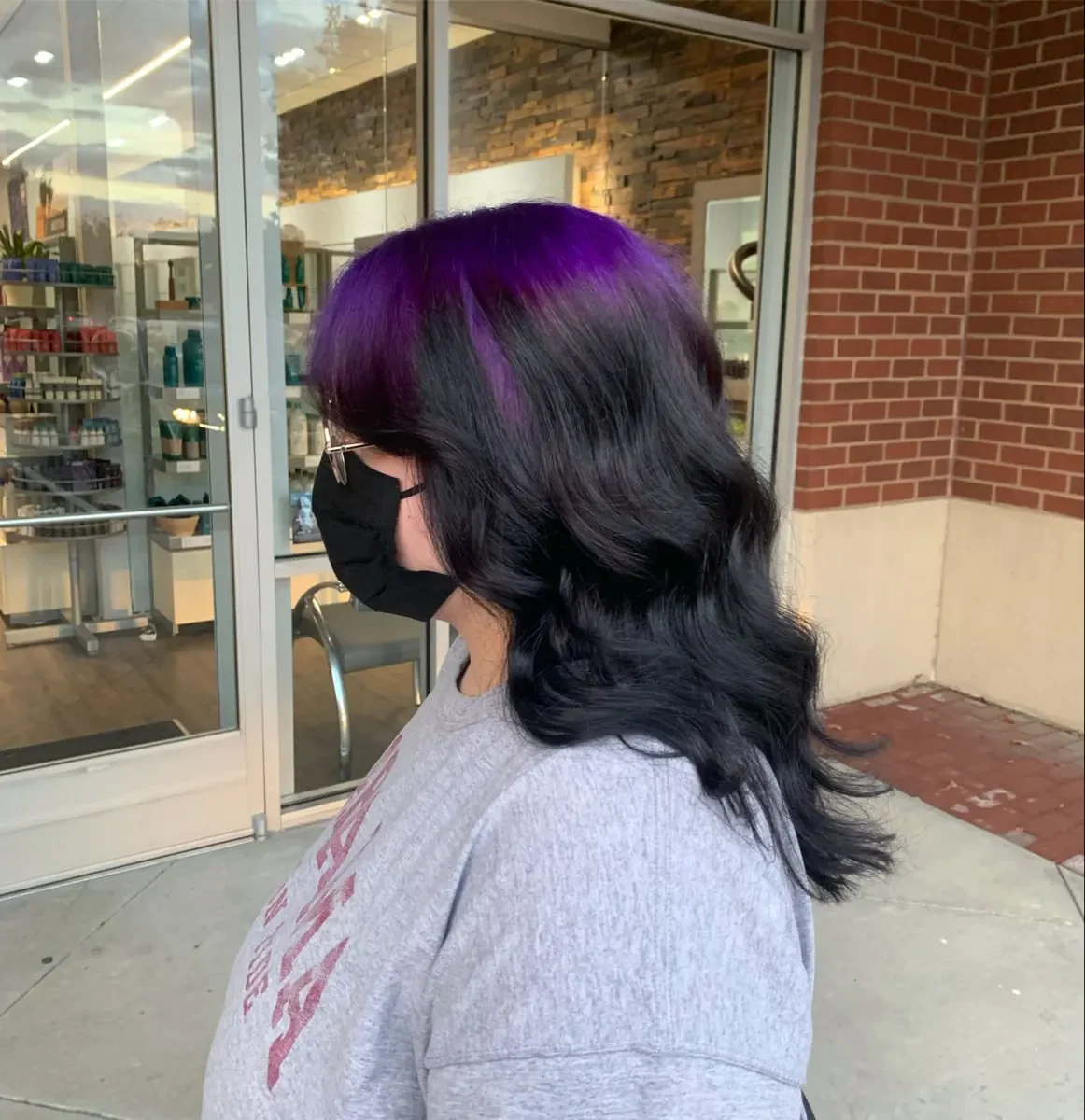
Violet sweeping across a side-part panel
The side view shows the purple widening from the part before dissolving into black body waves through the mid-lengths. The asymmetric panel works with the direction of the style and creates more color on one side without requiring an uneven finish elsewhere.

Neon yellow tracing a narrow center part
The bright stripe stays close to the part instead of covering the whole crown, creating a precise line against the long black lengths. It delivers high color contrast with relatively limited coverage, provided the hair is usually parted in the same place.
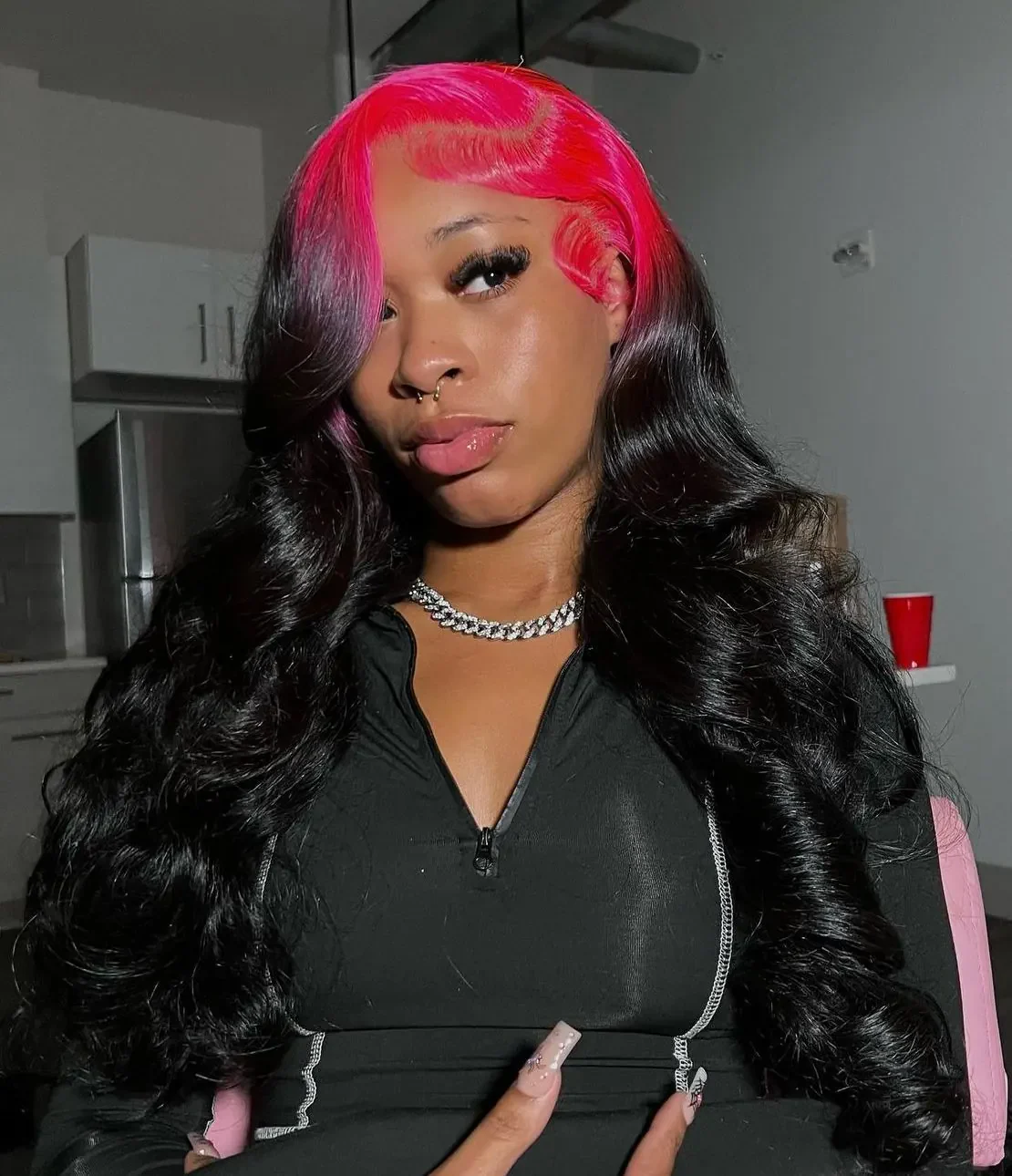
Hot pink sweeping across one side of the crown
A broad hot-pink panel covers the top and one side of the front hairline before meeting the long black body waves. The asymmetric sweep creates a much stronger face-side statement than a narrow or evenly balanced center-part placement.
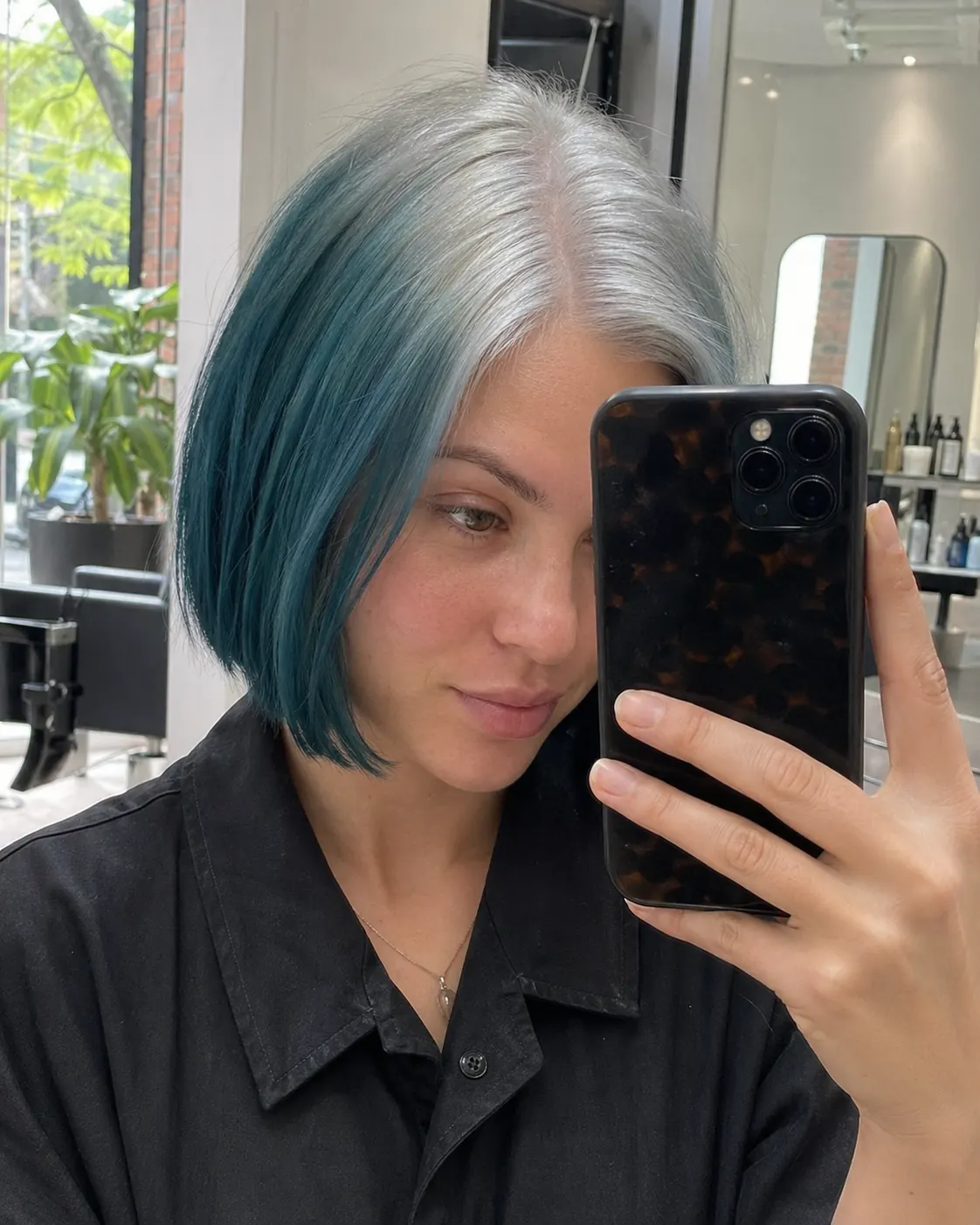
Silver-white roots over a teal-blue bob
The pale center section widens across the crown before meeting the teal-blue lengths, making the root boundary easy to compare in a short, smooth shape. Because both colors are cool, the contrast comes from lightness as much as hue, producing a different effect from white roots over black hair.
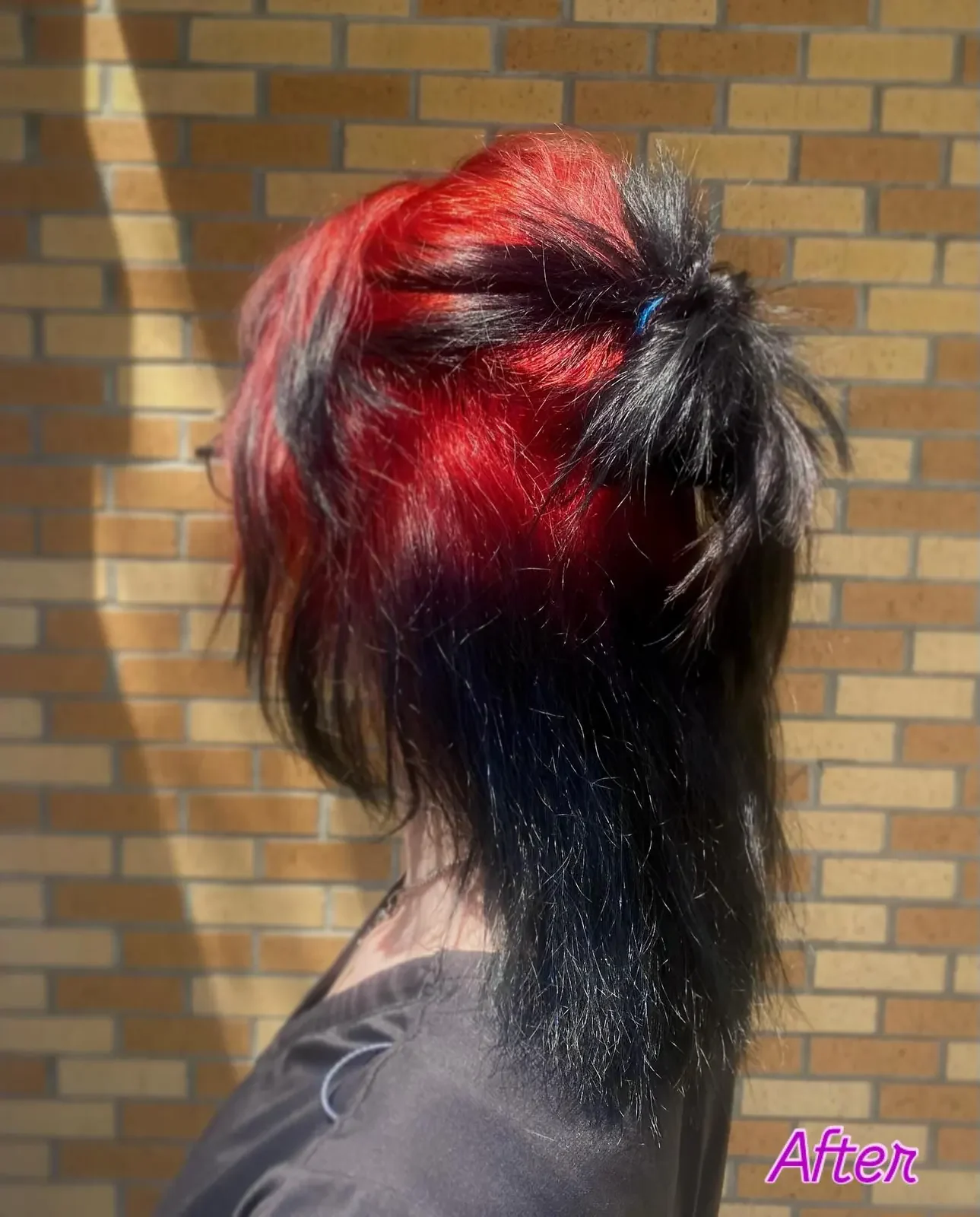
Red made visible by an updo
Lifting the lengths exposes the colored top section from behind and shows why an updo can reveal roots that look quieter when worn down. Anyone who frequently wears buns or ponytails should judge the placement in both raised and loose styles before choosing its width.

Forest green streaking into a top bun and fringe
Forest-green streaks run through the top section gathered into the bun and repeat across the blunt fringe, while the long side lengths remain black. The color becomes part of both the tied style and front frame rather than sitting only around the bun base.
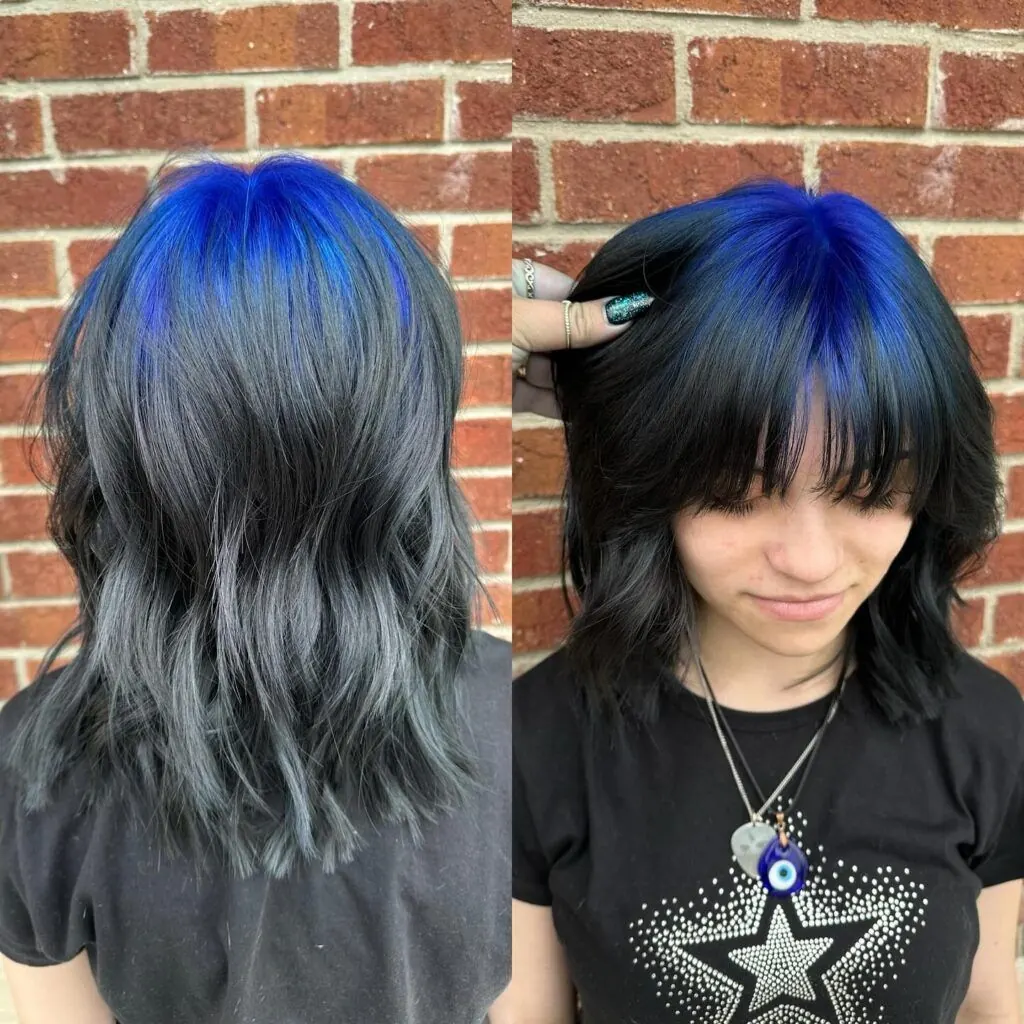
Blue changing the shape of a short bob
The paired views make it easier to compare how the crown color reads before and after the hair is arranged around the face. The blue becomes part of the bob's outline when the front layers move, rather than functioning only as a top-down detail.
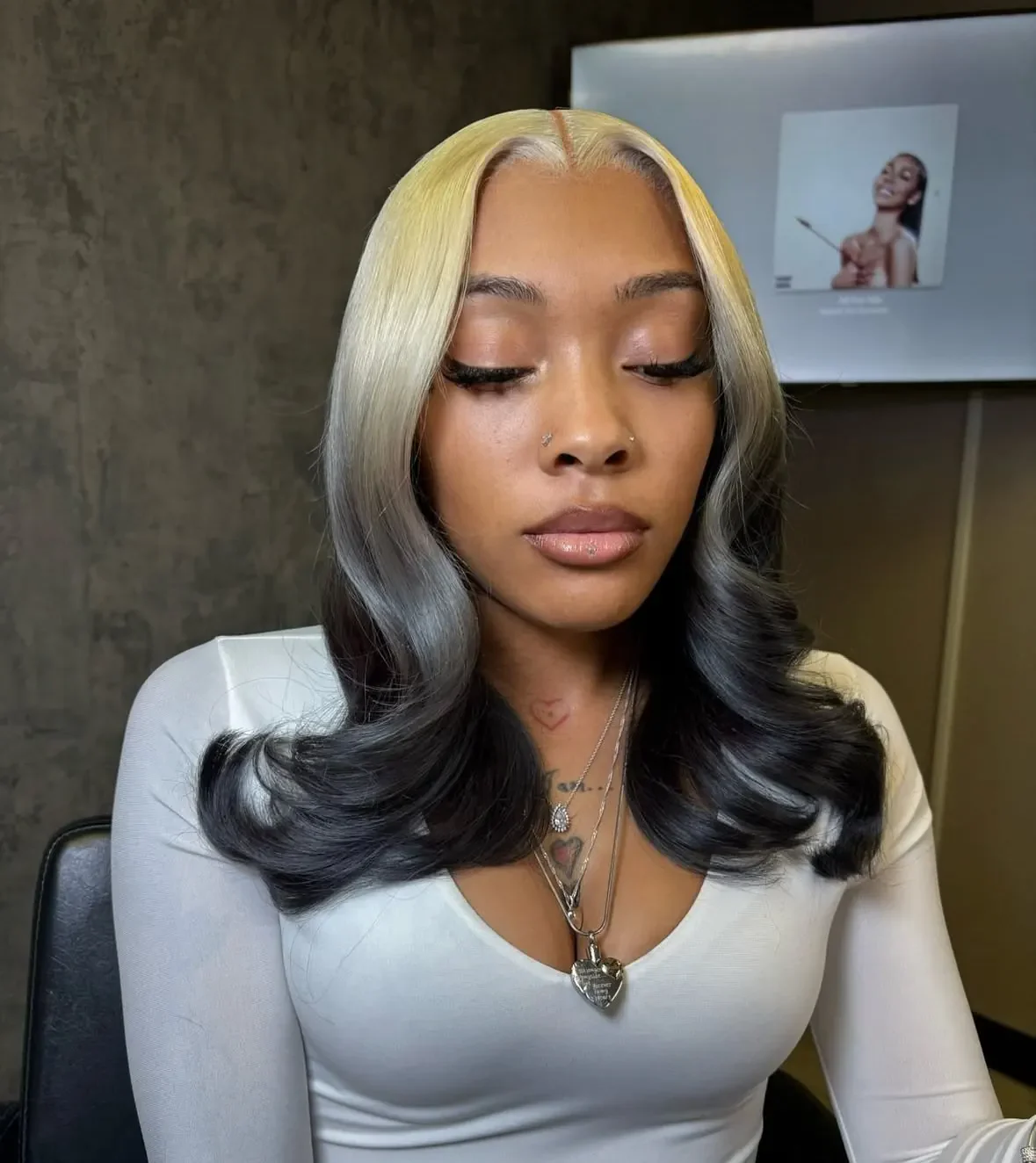
Blonde brightening the front without a full crown
The pale sections sit closest to the face, showing a softer route for someone who wants root contrast without coloring the entire top. The darker crown keeps the blonde focused around the complexion and allows more of the original base to remain visible.
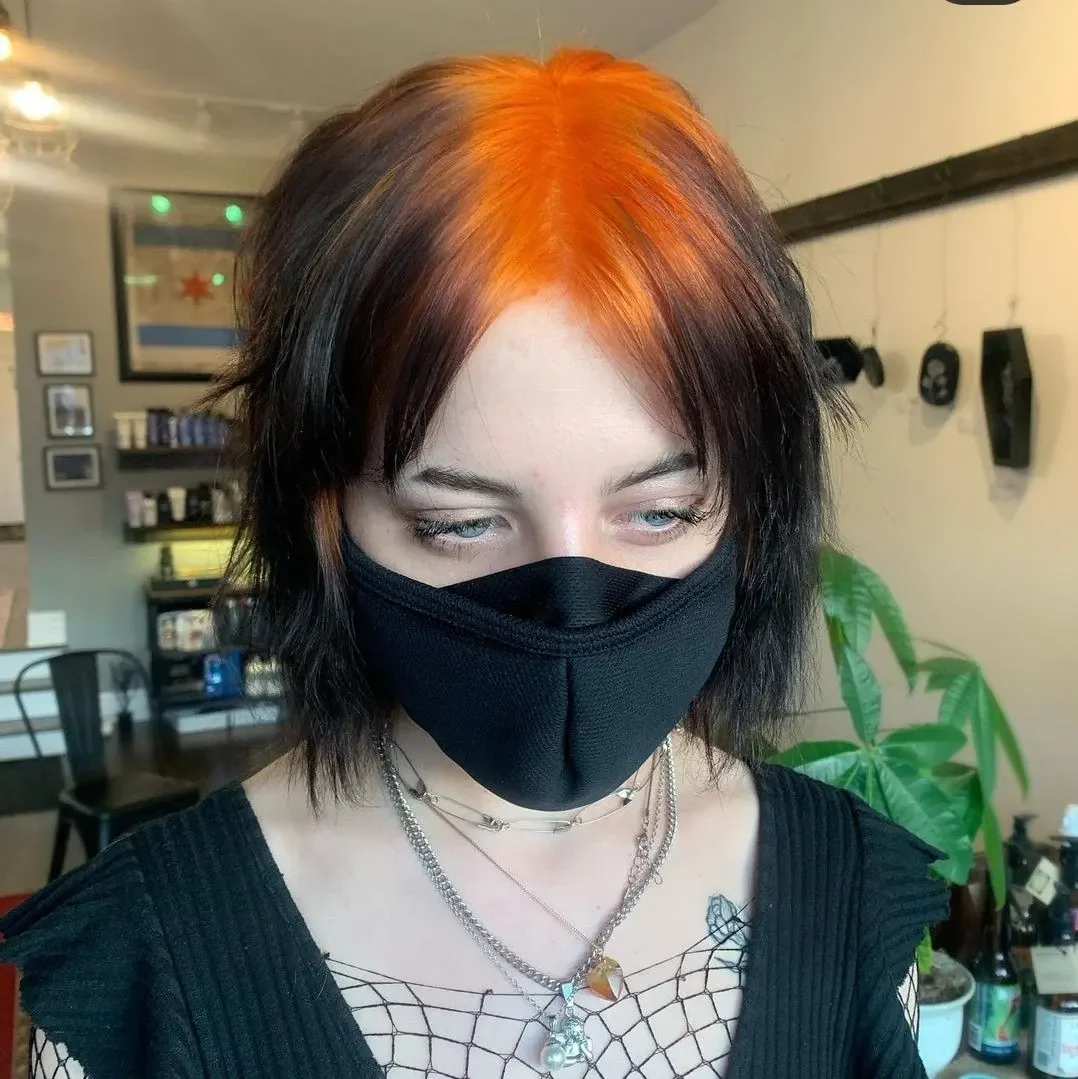
Red dividing a split fringe
The red root section follows the fringe opening and gives the shag a visible center accent even when the crown is less exposed. Because the fringe naturally separates, the placement maintains a clear red focal point without needing a wide section across the top.
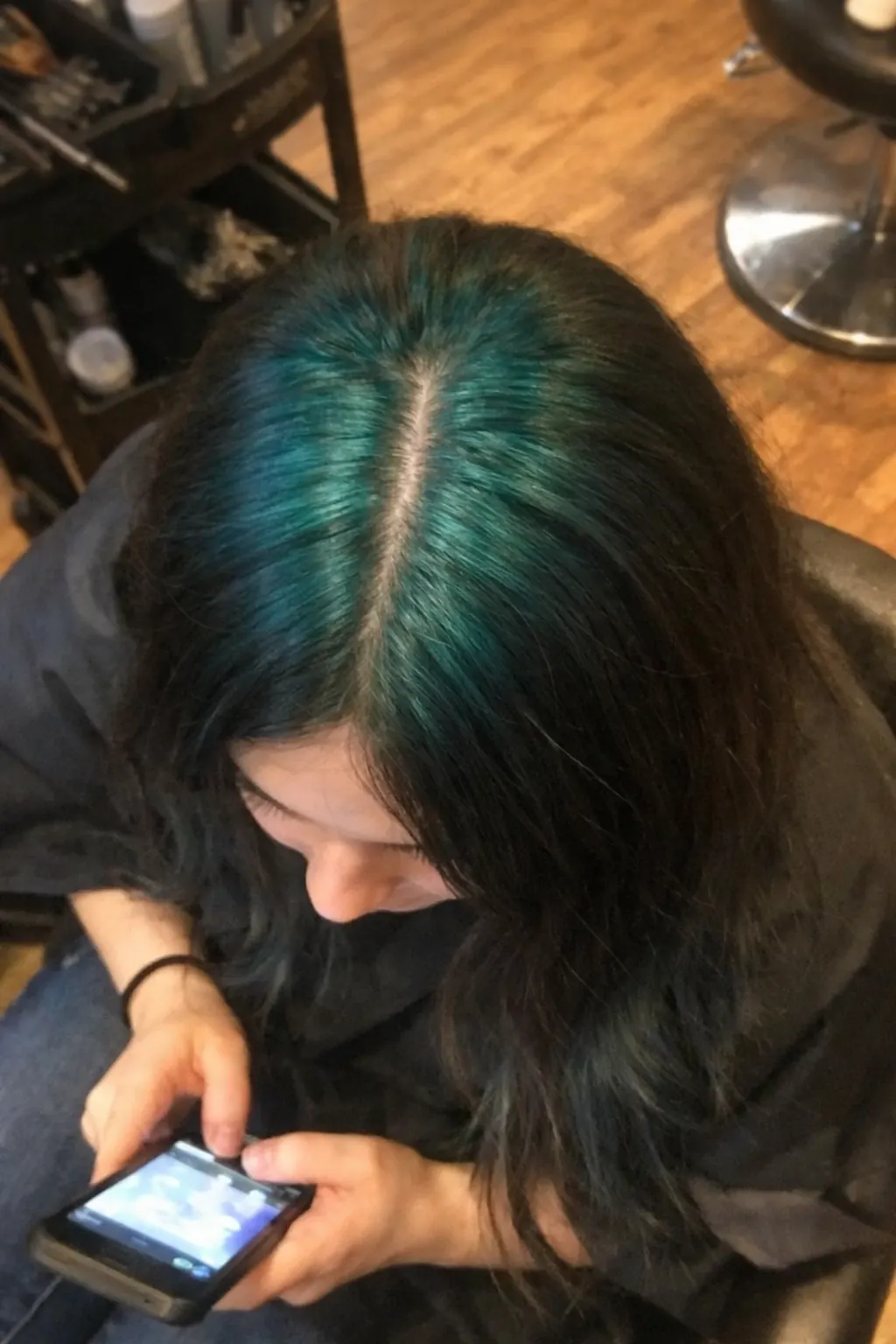
Deep teal concentrated around the center part
The top-down angle isolates the teal root section and makes its width against the black lengths easy to compare. The color remains dense near the part and stops before the outer crown, balancing clear visibility with substantial dark coverage.
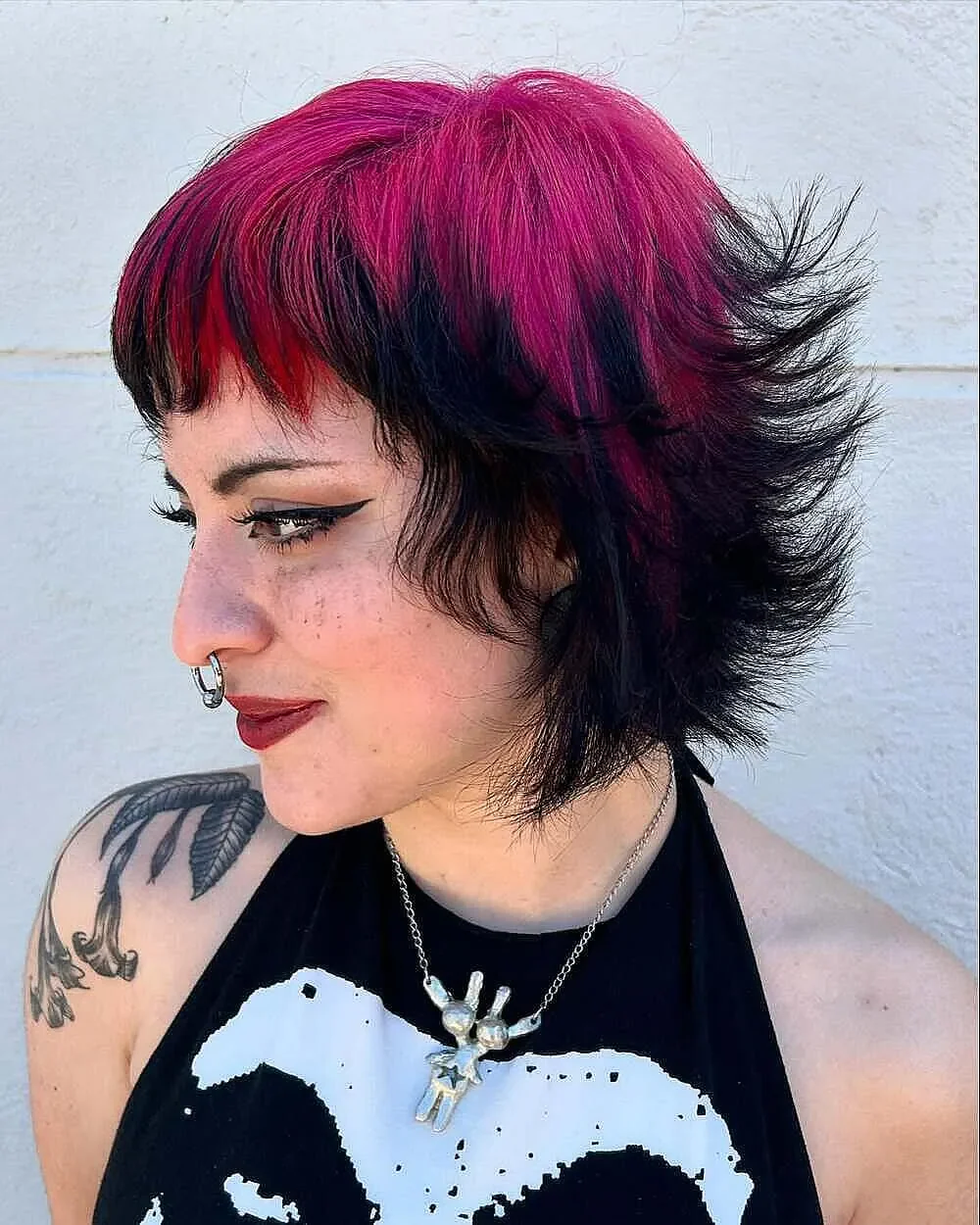
Pink sharpening a short spiky mullet
A compact crown panel follows the height and direction of the spikes, so the root color supports the cut rather than sitting separately from it. The pink becomes most visible where the short pieces lift, which makes texture and styling product part of the finished effect.
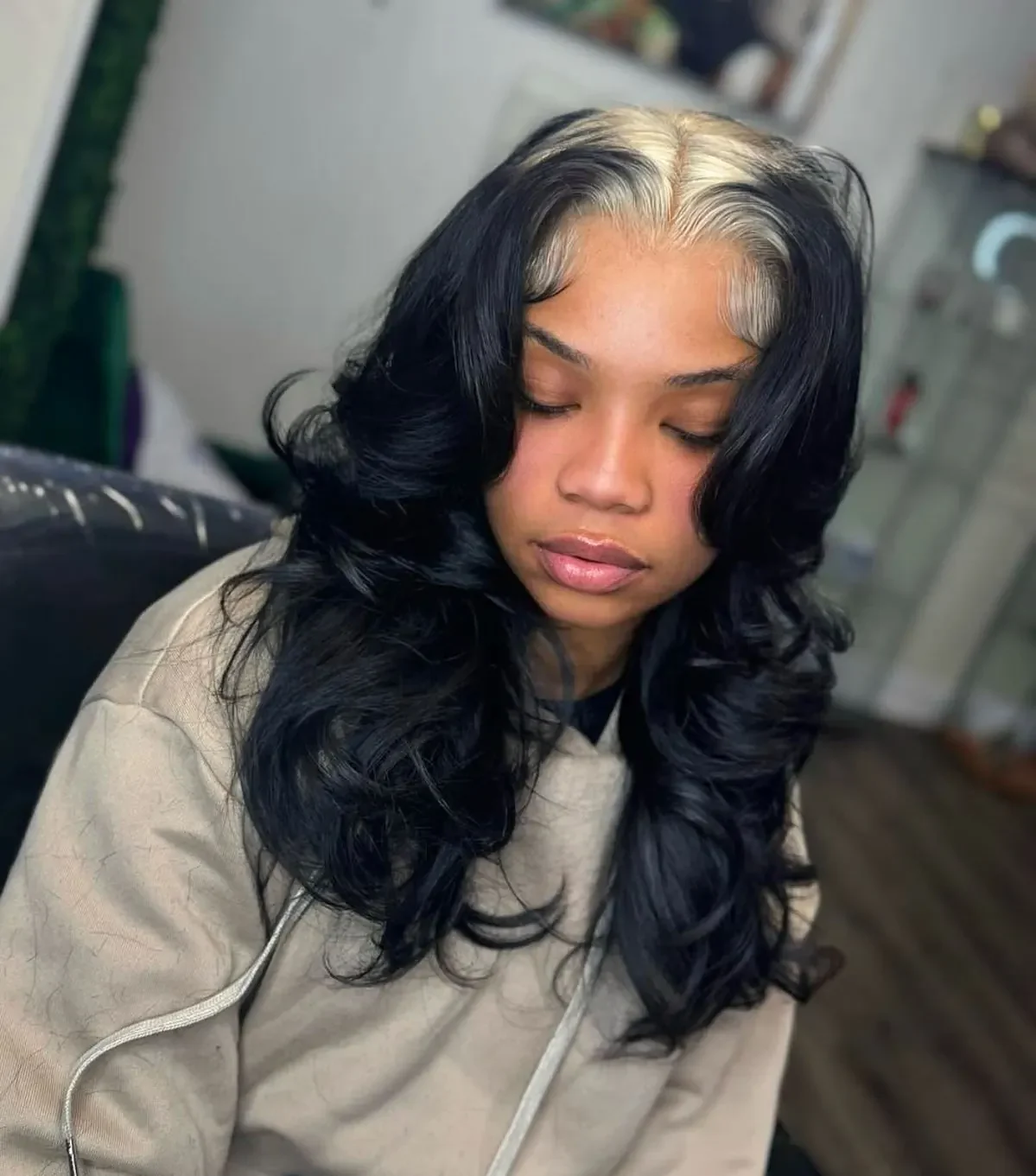
Silver-white framing long black curls
The bright front sections create a pale frame while the curl volume behind them stays dark, keeping the contrast concentrated around the face. The width is substantial enough to remain visible through the curls but stops short of becoming a complete white crown.
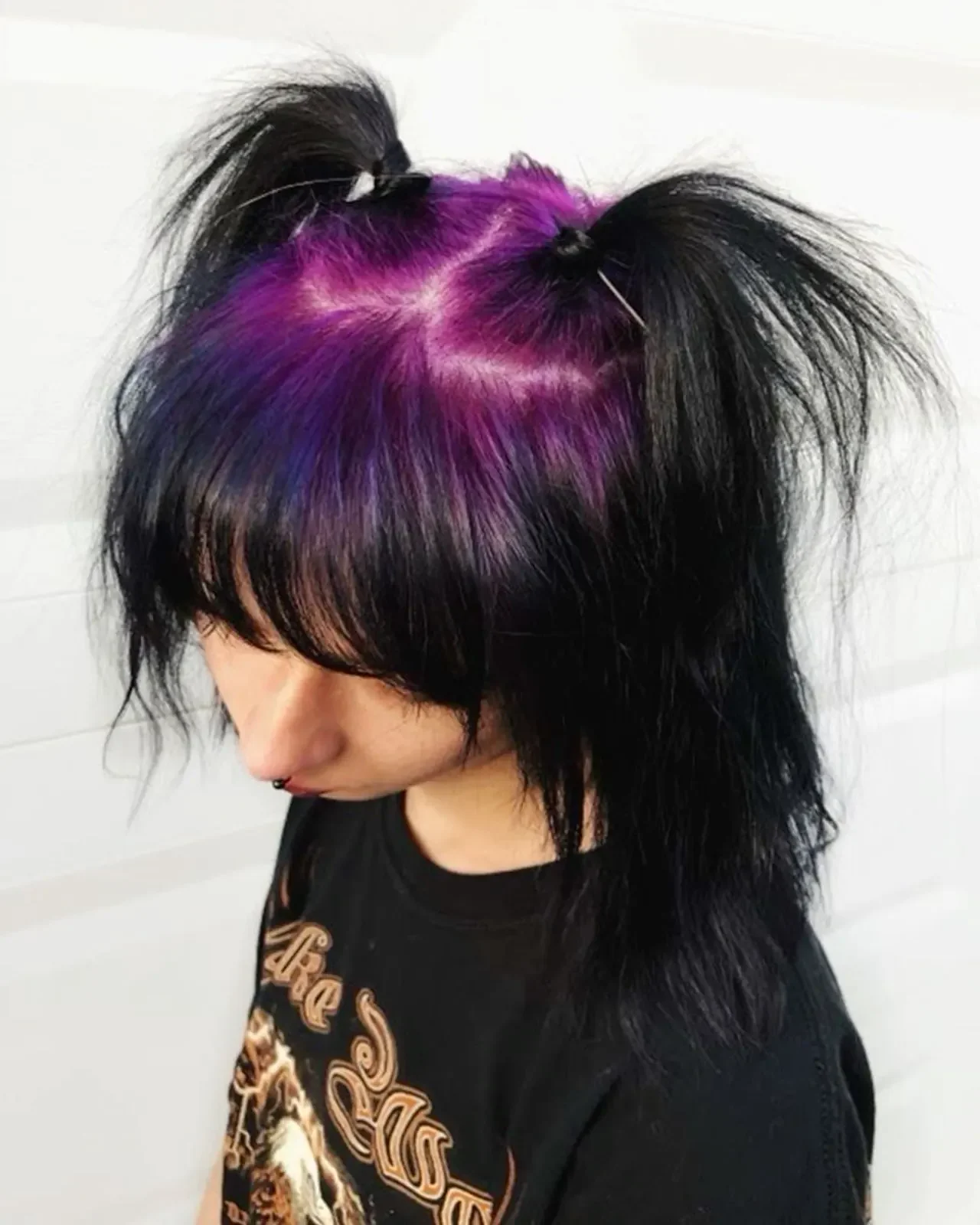
Purple exposed between pigtails and blunt bangs
Lifting the top into pigtails reveals the full purple crown boundary while the black fringe keeps the color framed at the front. This is a useful reminder to assess root placement in tied styles, where sections hidden by loose hair can become fully exposed.
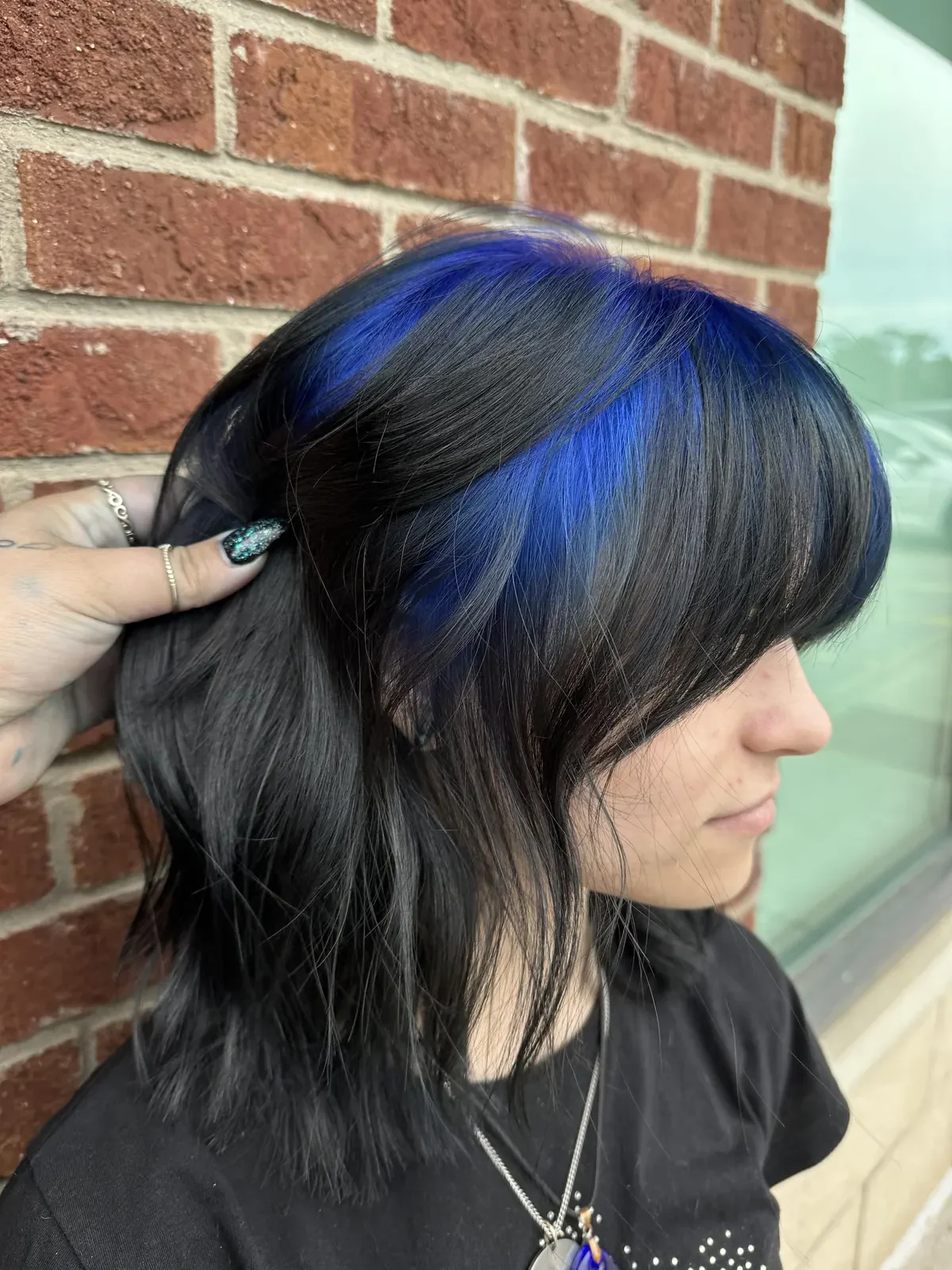
Blue tucked beneath a layered shag
The side profile isolates a cool blue panel under the black surface layers, giving the cut flashes of color instead of a full crown. The shag's shorter pieces uncover the blue at different heights, making the placement feel integrated with the cut.

Green peeking through long body waves
The green face-side section appears between black waves in small intervals, creating movement without coloring the whole front hairline. It is a quieter alternative to a complete face frame because the dark waves repeatedly interrupt the green.
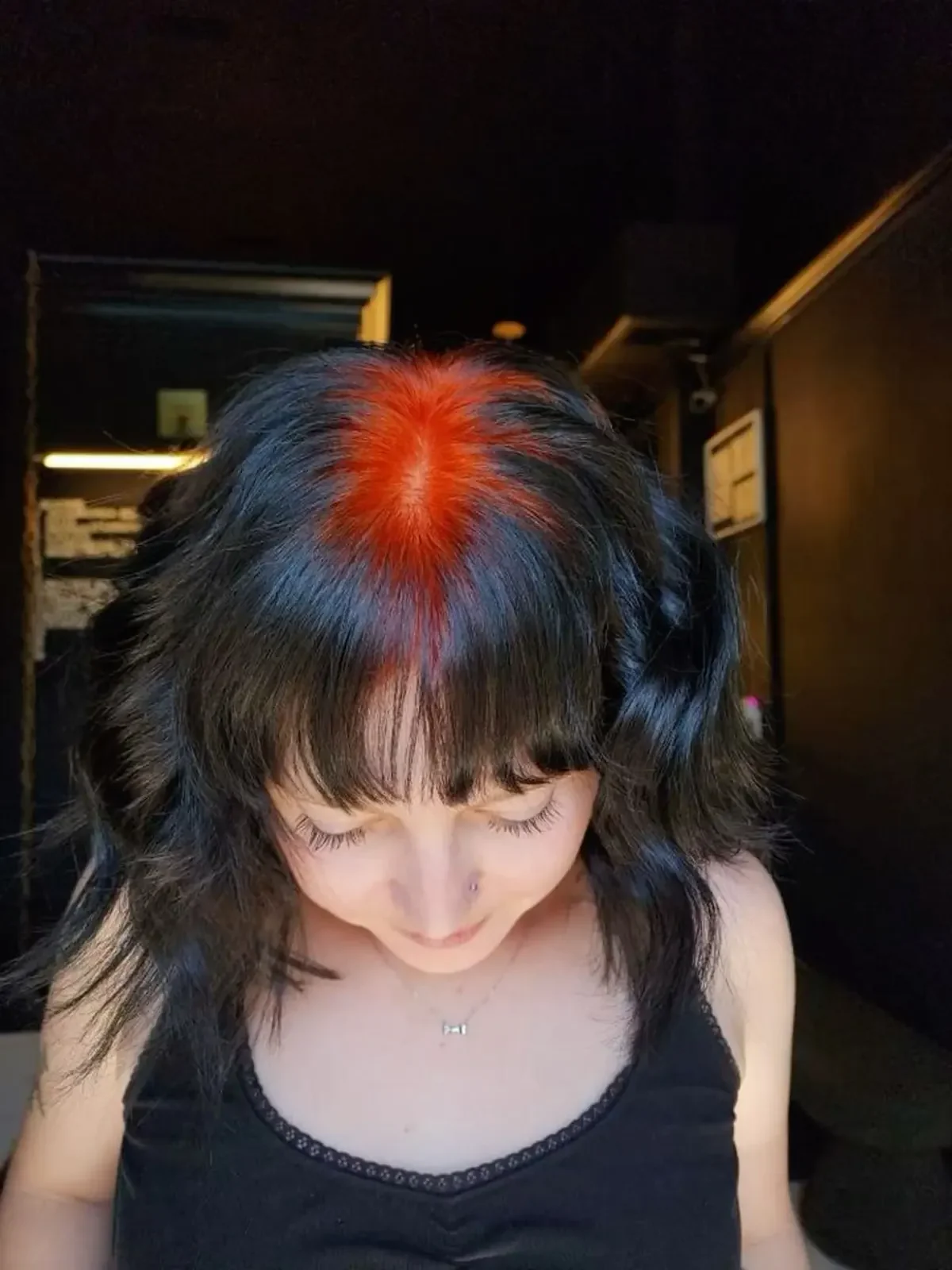
Red-orange concentrated at the center crown
The top view shows the vivid root section widening around the center part while the black pigtails and full fringe keep the rest of the shape dark. This placement remains visible from above but lets the fringe create a separate dark frame across the forehead.
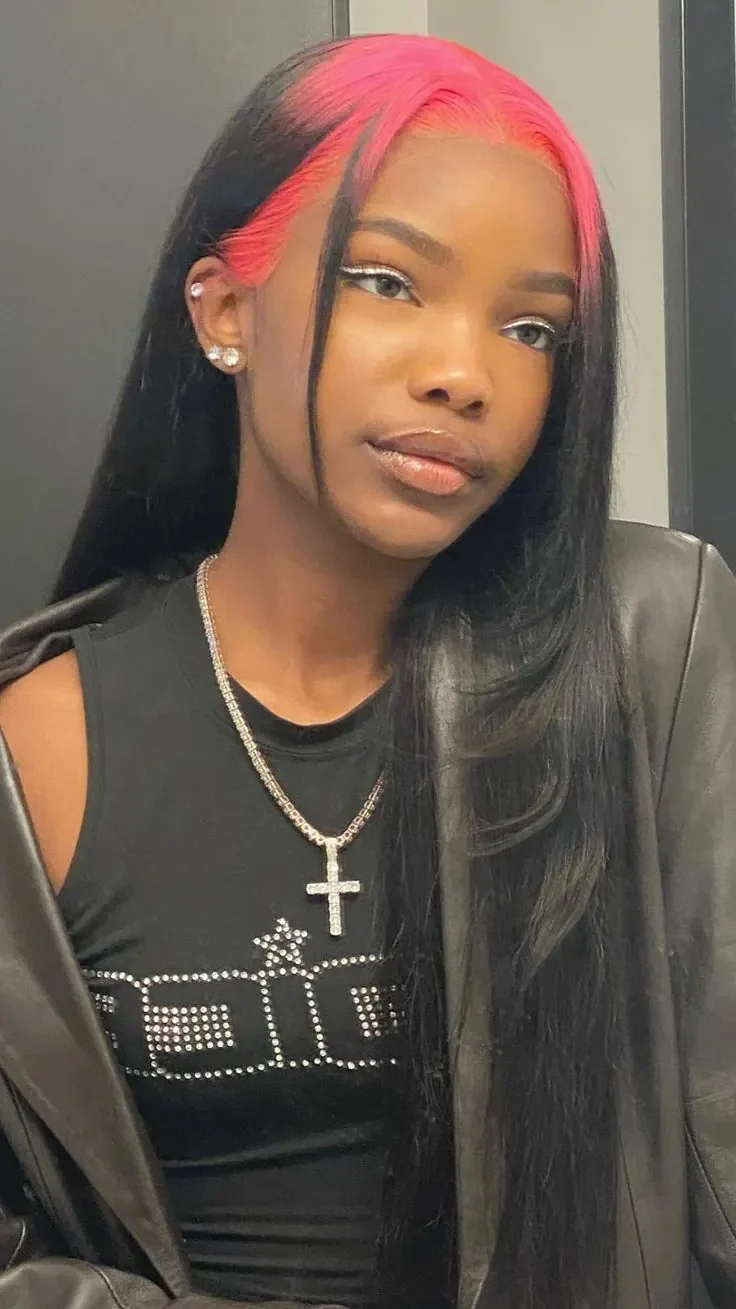
Hot pink widening across a sleek crown
The vivid pink begins at the center part and spreads across the top before narrowing into face-side pieces, while the long straight lengths remain black. On a smooth finish, the broad boundary stays clearly visible, making even sectioning particularly important.

White drawn through loose black waves
The narrow white center line remains visible from the front without spreading across the crown, making the placement feel precise and graphic. It is suited to someone who wants a defined part accent while keeping the surrounding root area and lengths predominantly black.
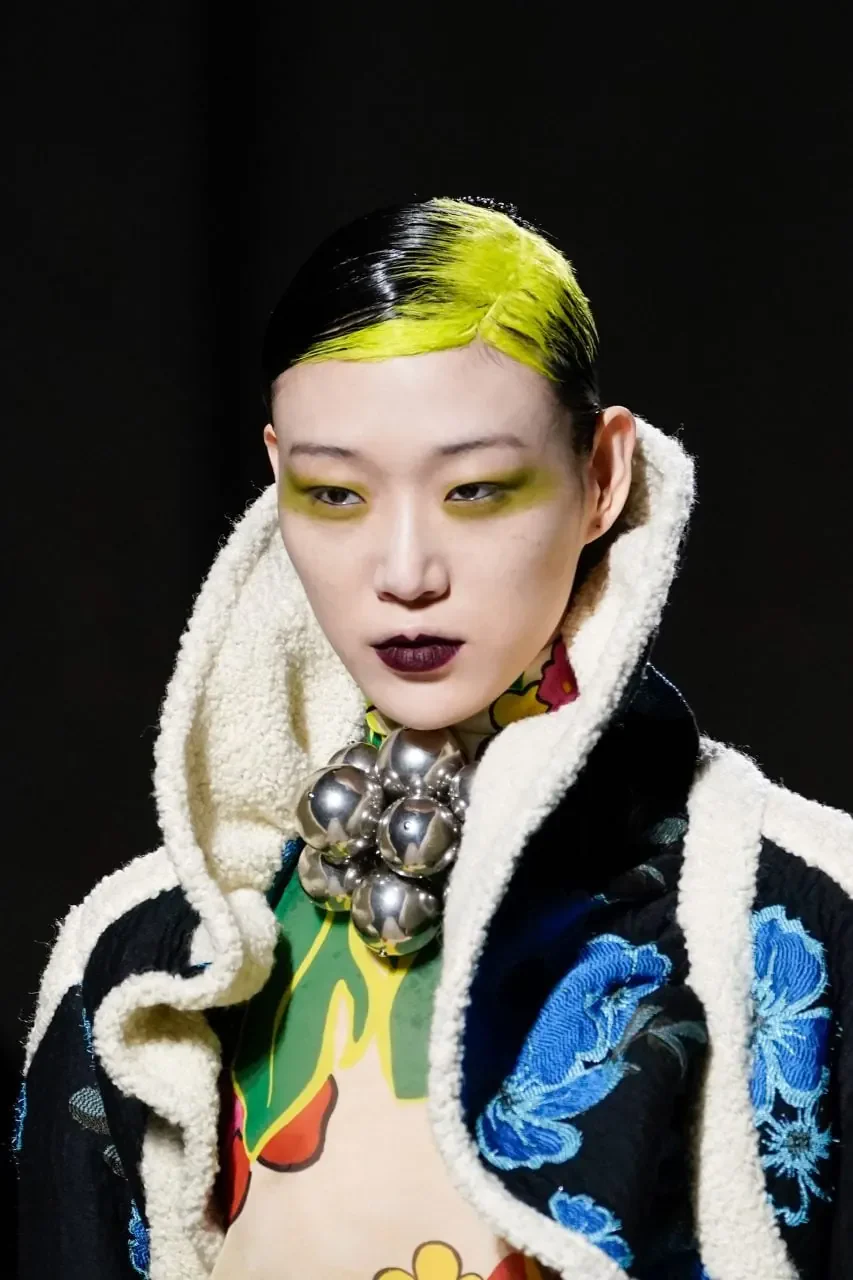
Neon yellow washed across slicked-back roots
With the hair brushed away from the face, the wider yellow section reads as a deliberate root wash rather than a hidden accent. Slicked-back styling exposes the complete shape, so the color remains visible from the hairline through the crown.

Red cutting through a sleek bob fringe
The side angle shows the red beginning at the split fringe and carrying just far enough back to stay visible in the smooth shape. The clean surface makes the boundary especially precise, so section width and symmetry will be more noticeable than they are on textured hair.

Teal following a clean center part
The front portrait shows a restrained teal panel that remains strongest at the part and fades before reaching the lower straight layers. Its limited width makes the part the focal point while preserving a predominantly black silhouette from the front.
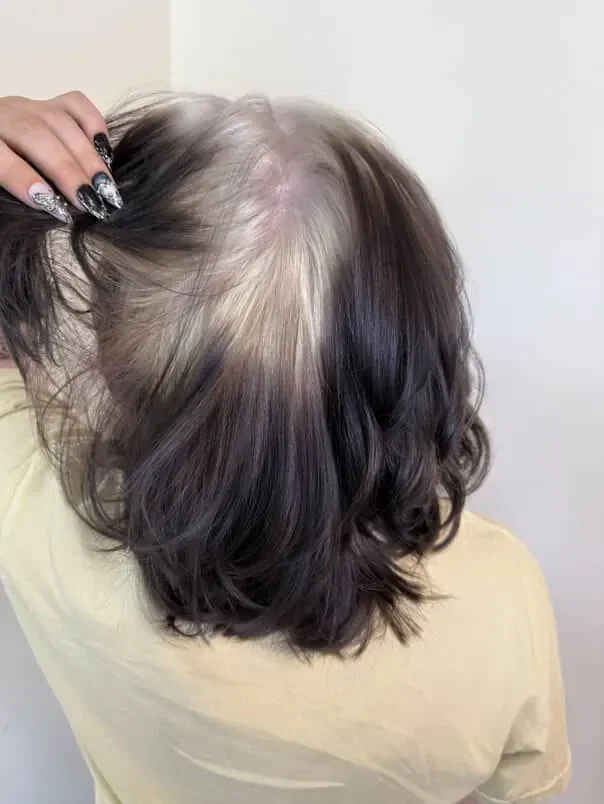
Silver-lilac revealed beneath a short wavy bob
Lifting the top layer makes the pale lilac crown visible and shows how much of the placement can disappear when the bob falls naturally. The broad hidden panel gives more color when the hair moves while allowing the dark outer shape to dominate at rest.
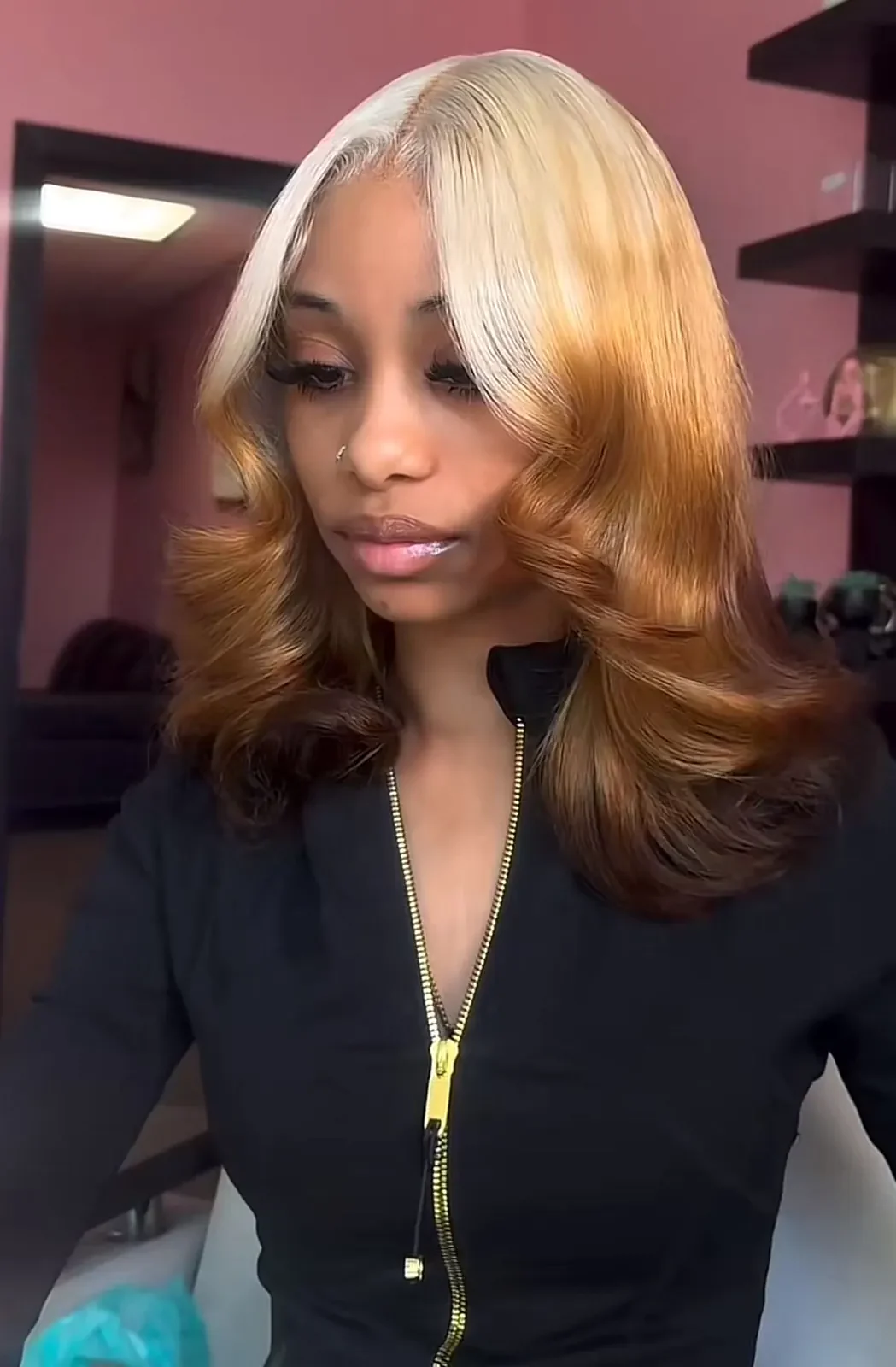
Pale blonde opening into warm brown waves
The finished blowout shows a broad pale top transitioning into warm brown lengths, with enough movement to judge how the contrast reads when the hair is dry. The warmer base softens the difference more than black lengths would, which produces a lower-contrast version of the look.
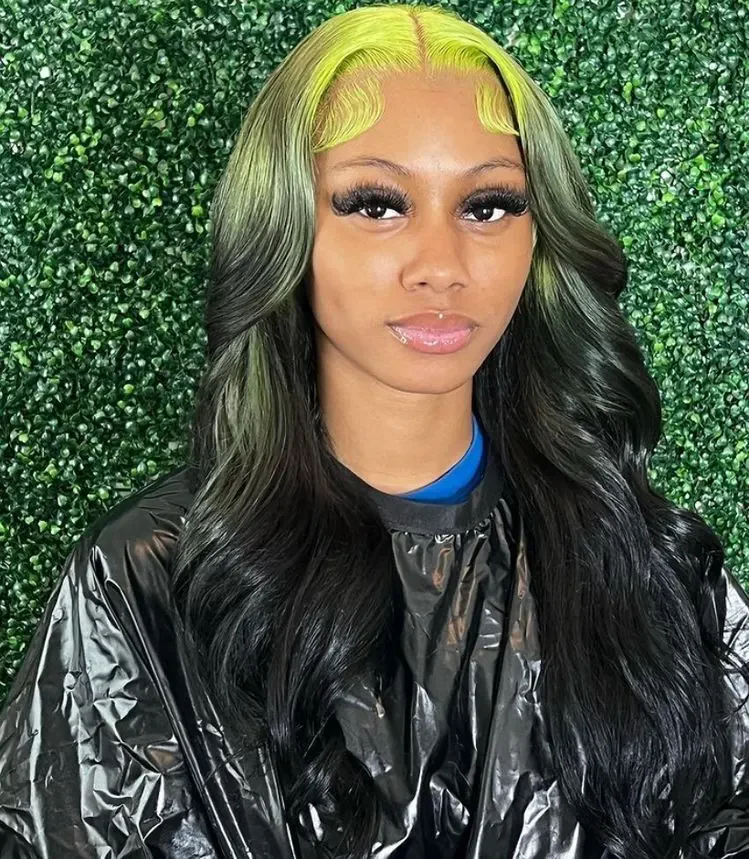
Chartreuse framing the face over long black waves
The lime-green section begins at the front roots and follows the hairline, keeping the strongest contrast beside the face rather than across the crown. It is a useful option for someone who wants a vivid front view while retaining black depth through the top and long waves.
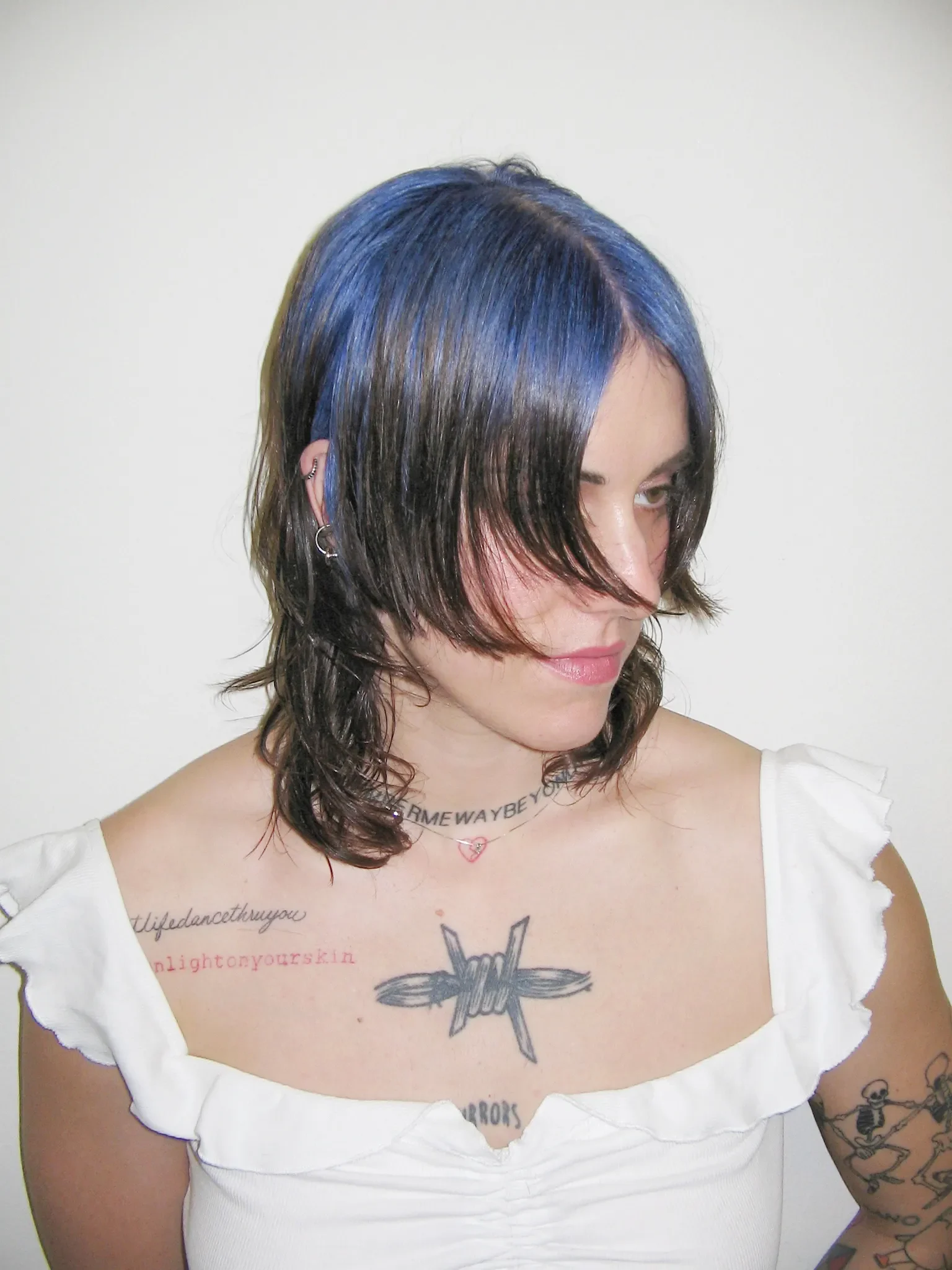
Cobalt blue spread across a layered crown
The blue follows the center part and widens across the crown, while the black fringe and lower layers keep the contrast concentrated near the top. The layered shape breaks the blue into several visible edges, which helps the color feel connected to the cut rather than painted over it.
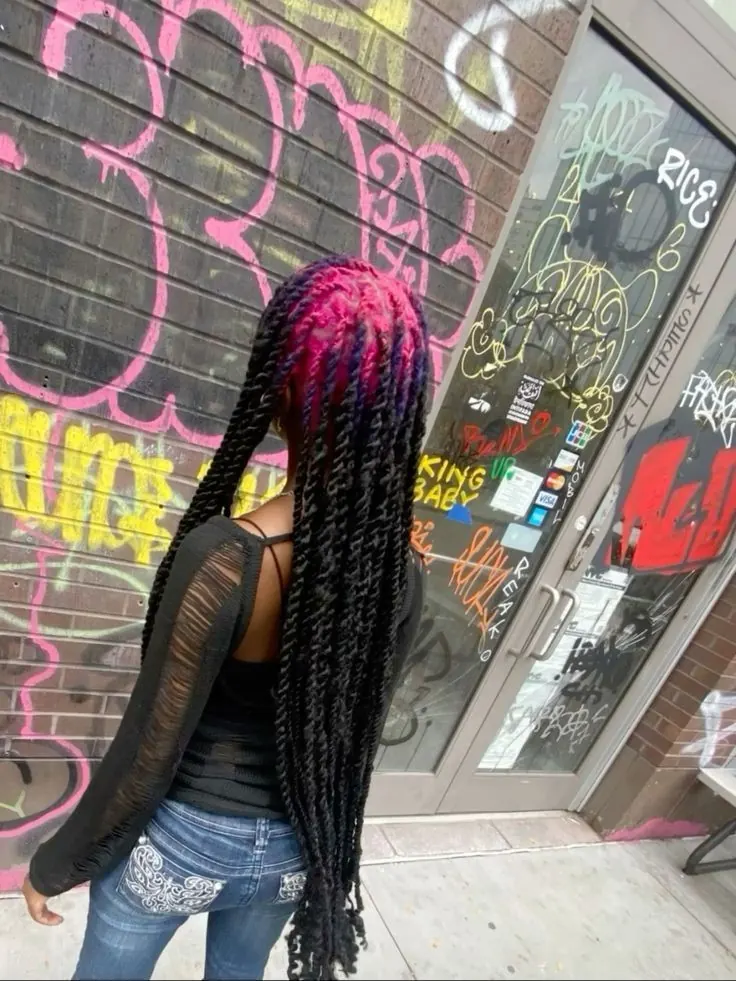
Magenta roots feeding into long black box braids
The rear view shows the pink concentrated across the braided crown, making the sectioning pattern visible without coloring the full braid length. The root placement gives the braids a vivid starting point while allowing the long black lengths to remain the dominant color.
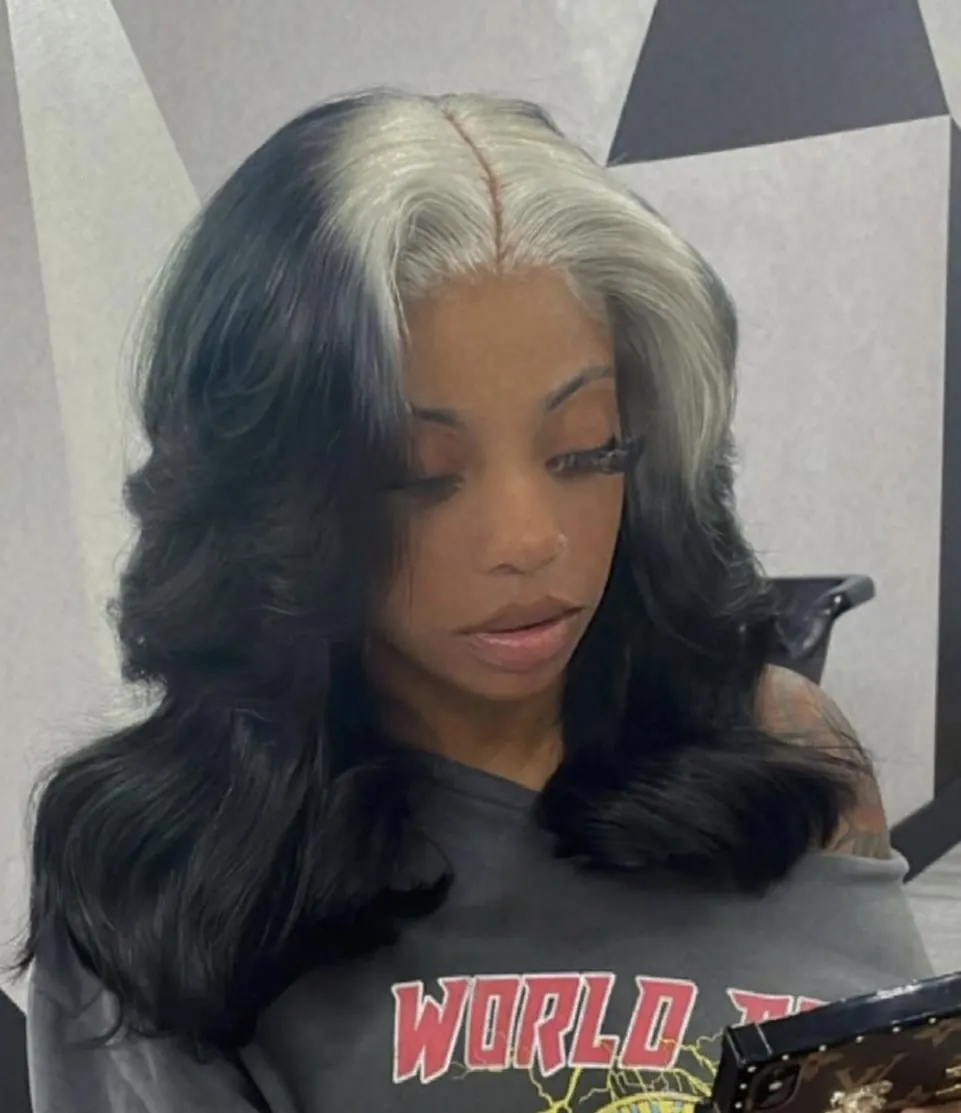
Silver-white widening around the face
These brighter sections are wider than a single stripe and connect the root contrast to the front body waves. The broader face frame produces more light around the complexion while the central black sections preserve depth and separation.
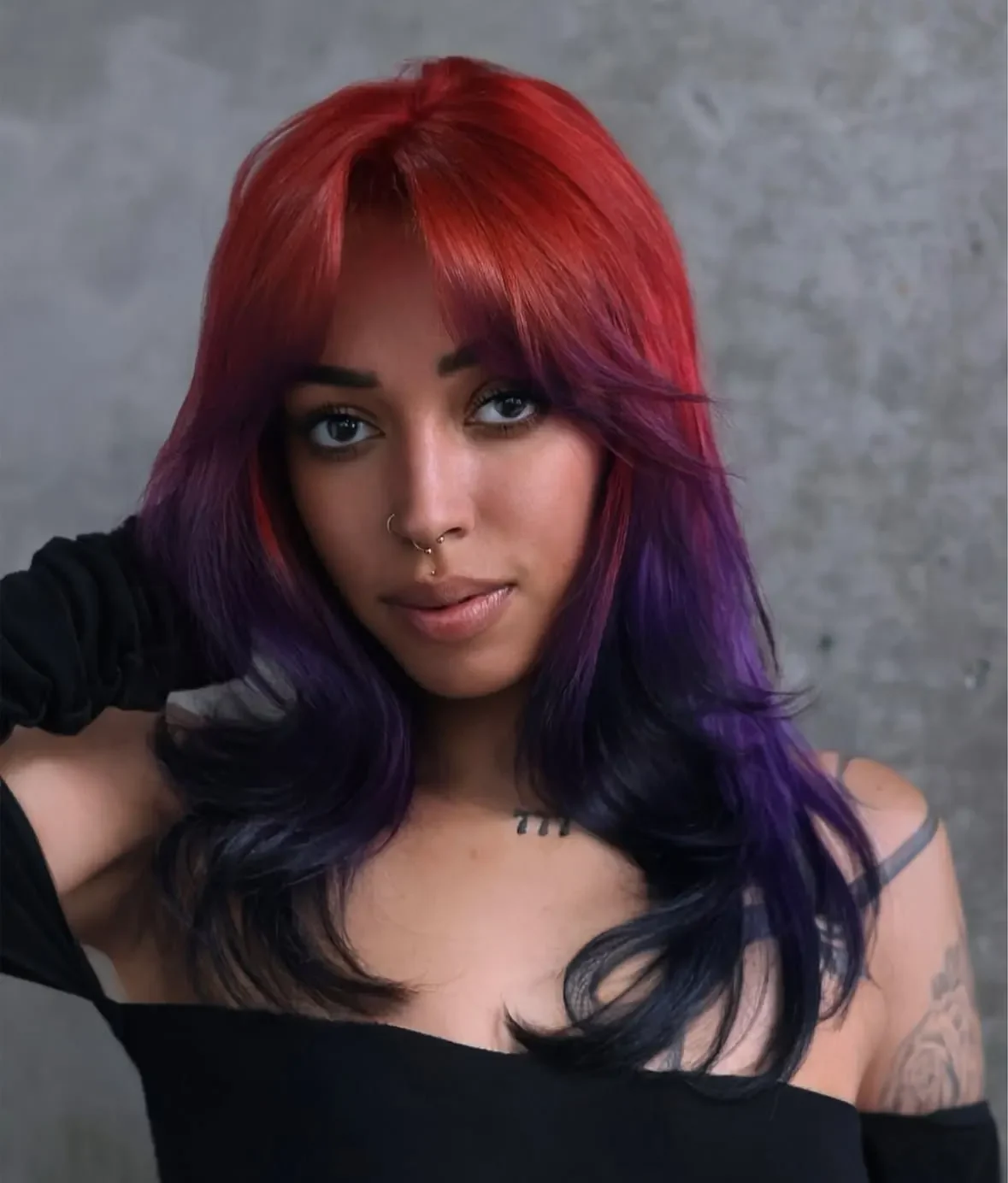
Red roots melting into violet and blue-black waves
The red begins across the full top and softens into violet through the face-framing layers before the lower waves deepen toward blue-black. This is a multicolor transition rather than red roots over uniformly black lengths, so the boundary reads softer and more gradual.
What makes it ghost roots?
Ghost roots use deliberate contrast at the root.
The colored section starts at the part, crown, fringe, face frame, temple, or beneath a surface layer. Its edge can be sharp, diffused, or irregular, but it is designed to be seen. It is different from natural regrowth that appears as dyed hair grows.
See how ghost roots differ from regrowth and shadow rootsHistory and context
How ghost roots became a recognizable look.
Contrasting root color existed before the name ghost roots became widely used. The look draws from color blocking, alternative hair color, deliberately exposed roots, and experimental fashion styling.
A memorable runway interpretation appeared at Dries Van Noten Fall 2020, where colored feathers were fixed along slicked partings to create the illusion of vivid roots. High-contrast celebrity versions, particularly Billie Eilish's neon-green and later red roots over black hair, helped make root-focused color immediately recognizable.
Today, ghost roots range from narrow part lines and broad crown panels to colored fringe roots, face-framing sections, and concealed underlayers.
Find the right reference
Browse by haircut, length, and styling context.
The same root color can look completely different when a cut changes what stays exposed. Start with the shape closest to your own hair, then compare placement and section width.
Plan the look
Plan the color, cost, upkeep, and grow-out.
A reference image shows the result. These guides help you decide how to create it, what may affect the quote, how the color changes between appointments, and what to do when it grows.
Color process and hair condition
Compare direct dye, permanent color, toner, pre-lightening, section width, strand testing, and application order.
Plan the color process02How long ghost roots last
Match washing, color-depositing care, toner, and refresh timing to the chosen shade and placement.
Plan the upkeep03Cost
See how lightening, section size, color choice, salon time, and later refreshes can change the quote.
Prepare for a quote04Growing it out
Compare refreshing, blending, glossing, recoloring, or letting the placement move farther from the scalp.
Choose a grow-out pathIndependent editorial publication
About Ghost Roots Hair
Ghost Roots Hair is an independent visual hair-color publication founded and edited by Bella Hedson. We document ghost-root colors, placements, maintenance decisions, and salon-planning considerations through visually reviewed examples and focused guides.