Green ghost roots are one of the clearest alt versions of the look because the root color cannot hide. Neon green, lime, chartreuse, mint, and forest green all work, but they do not behave the same way on dark hair. The brighter shades need more lift, the softer shades need cleaner toning, and the moodier shades need enough contrast so they do not disappear into black or brunette lengths.
The best green ghost roots are visible at the scalp-adjacent zone: fringe, crown, center part, top layer, top curls, or face frame. If the green is hidden too deep underneath the hair, it starts reading like peekaboo color instead of ghost roots. The goal is not random green streaks; it is a planned root panel that makes the haircut look sharper.
For a recognizable broad-crown example, the Billie Eilish ghost roots guide compares her neon green placement on short hair, long hair, and a loose updo, then shows how the same idea changed in red.
Visual Ideas
Green Roots That Stay Connected to The Haircut
These green ghost roots references focus on the local looks that clearly read as green: chartreuse-lime, neon green, neon lime, mint green, forest green, and green-leaning face-frame placements.

Forest Green Straight
Forest green is exposed beneath a small top bun and continues into the short fringe, while the straight lengths remain nearly black. The placement turns an updo into the reveal mechanism for a deep, wearable green.
Neon Lime Body Wave
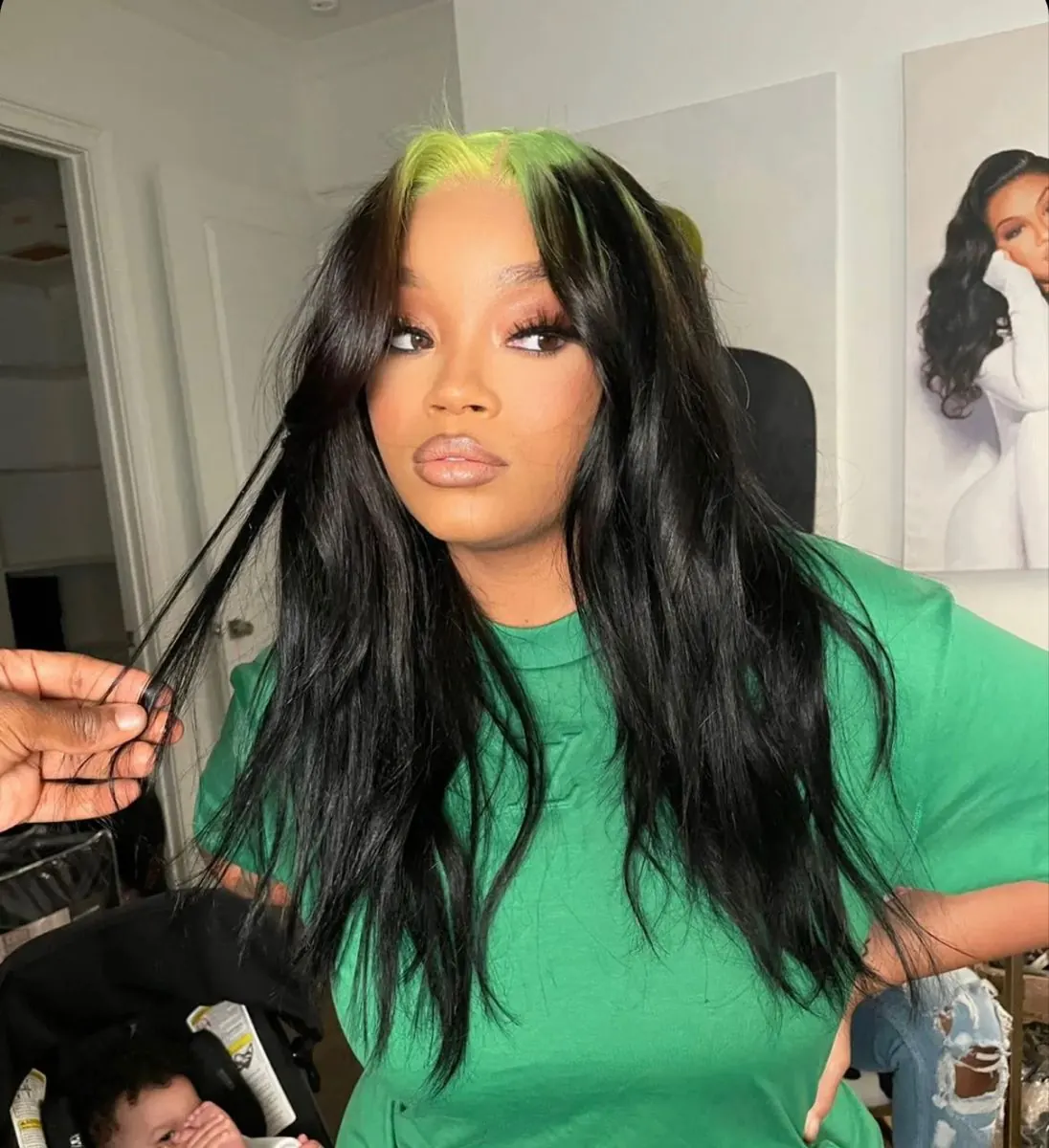
A neon-lime money piece is tucked beneath black body waves and becomes brighter as the stylist lifts the front section. It is a clear example of hidden green that can be expanded or concealed through styling.
Neon Lime Glam Wave
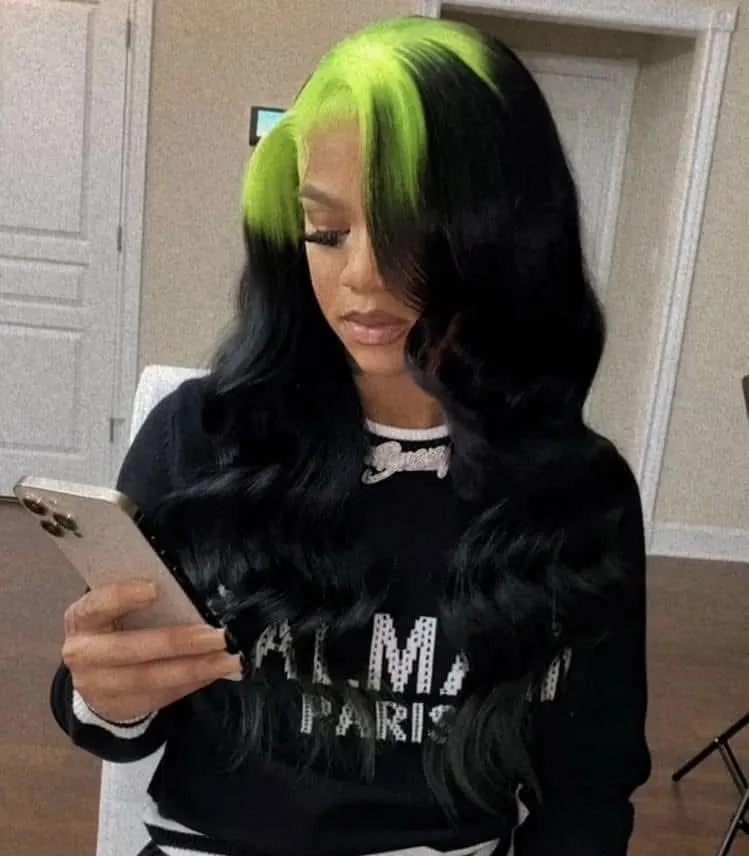
Neon lime fills one side of a split root, leaving the opposite side black across long glam waves. The unequal color balance is intentional and creates a bolder result than two narrow matching pieces.
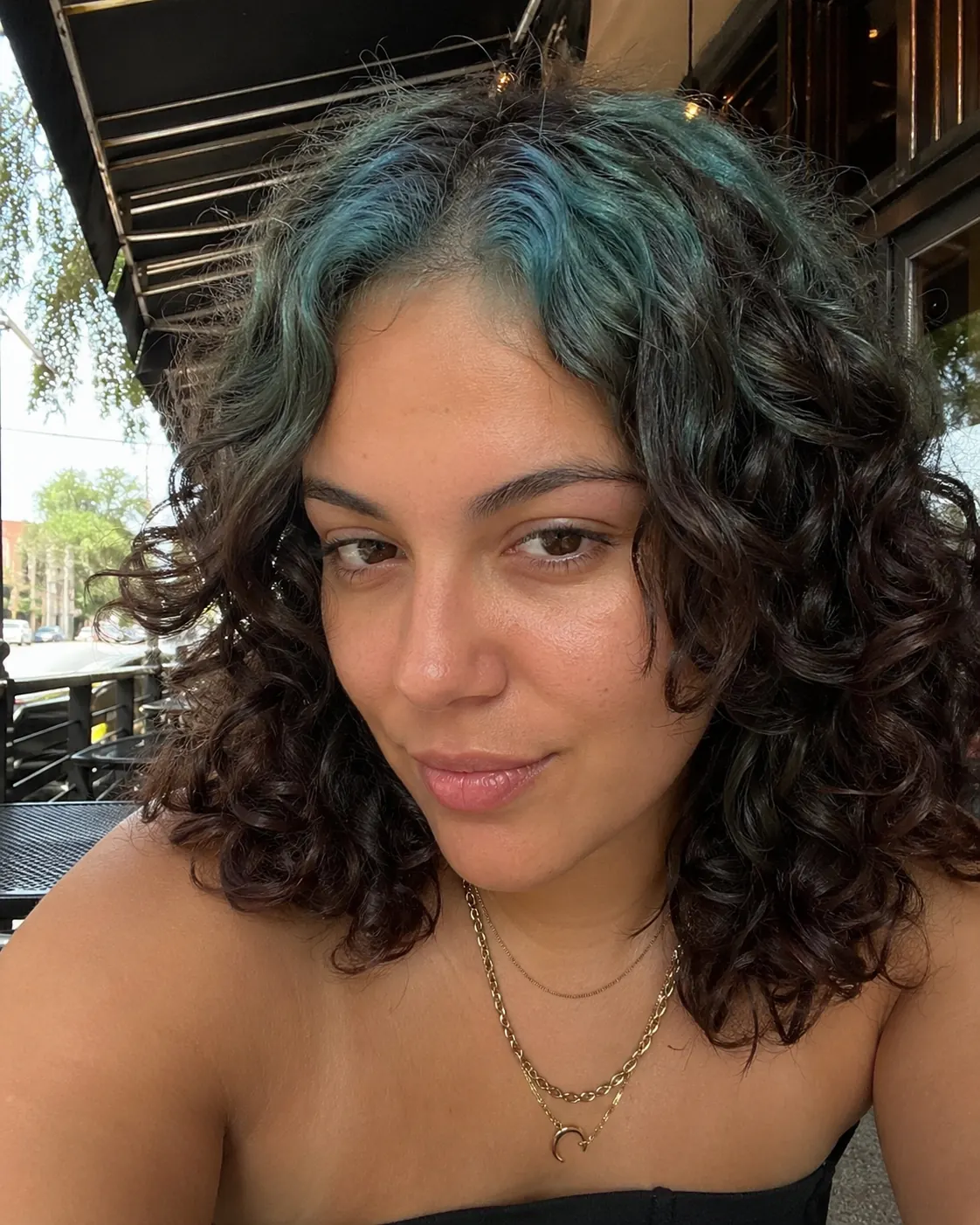
Teal Green Curly Bob
Teal-green follows the face frame of a naturally curly bob, appearing in slim ribbons between dark curls. In daylight the color reads green-led, while the curl pattern keeps its boundary soft.

Neon Green Sleek Bob
Neon green covers the top and split fringe of a compact black bob. The short, glassy shape gives the color a clean edge and makes any uneven root coverage immediately visible.

Chartreuse Lime Straight
Chartreuse runs as a bright center stripe from the scalp into long straight black hair. The yellow-green hue is unmistakable here, useful for distinguishing true lime from cooler emerald or teal roots.
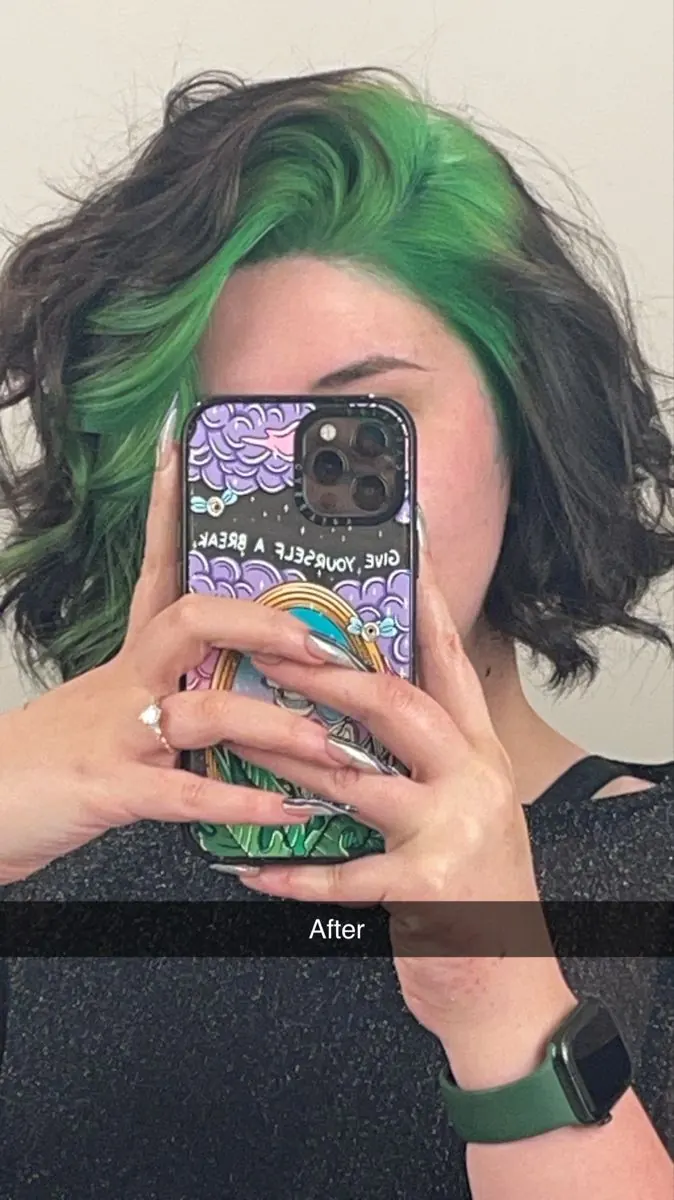
Neon Green Wavy Bob
A neon-green top panel spreads through a wavy bob, with black curls forming a dark border around it. The mirror angle shows how the panel widens behind the fringe instead of ending at the part.
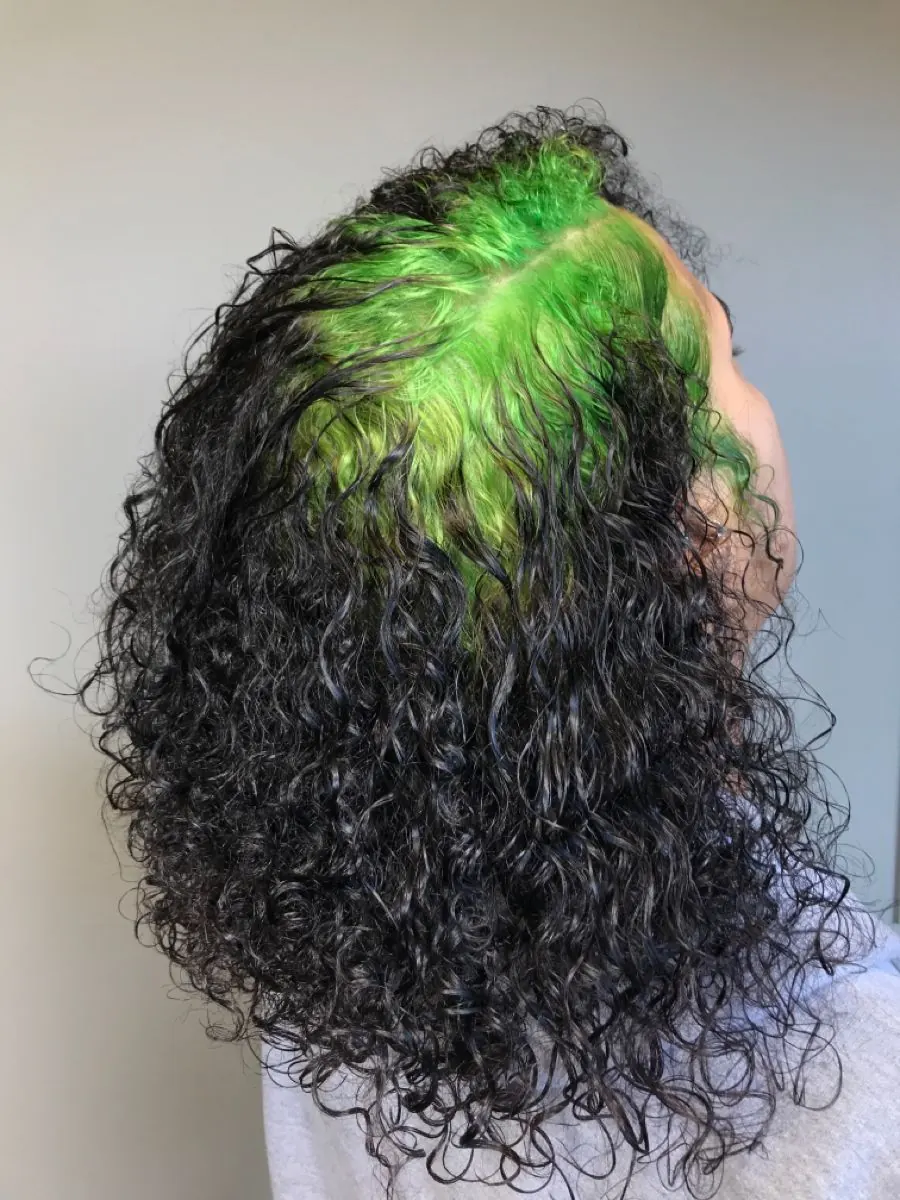
Neon Green Curly
The back view exposes a vivid green crown surrounded by dense black curls. Because the curl clumps divide the color naturally, the edge can remain irregular without looking like accidental patches.
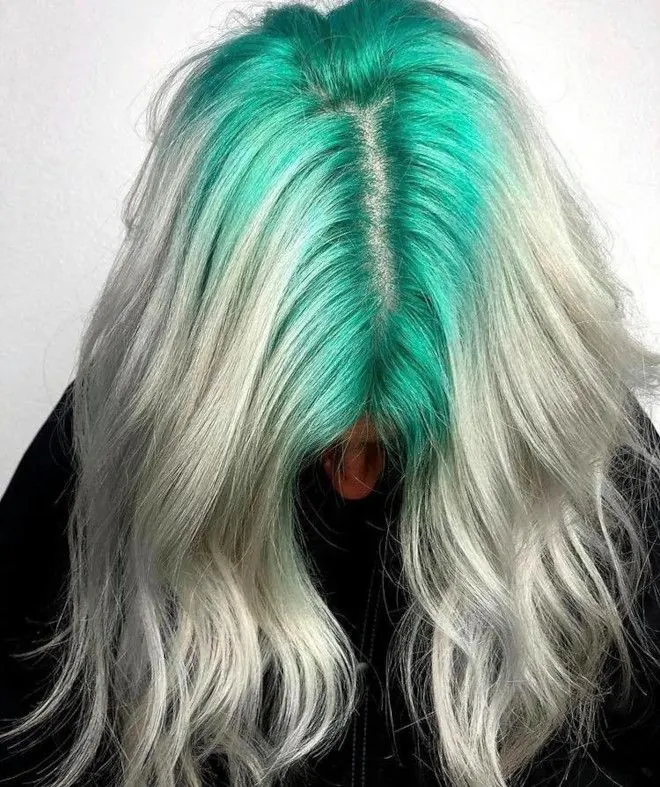
Mint Green Loose Wave
Mint green forms a narrow stripe along the top of silver-white waves. The pale base reduces contrast, so the effect depends more on the cool green tone than on a dark-versus-light boundary.
Chartreuse, Neon, Mint, And Forest Green do Not Share a Base
Neon green is the sharpest option. It looks strongest on black hair, short cuts, split fringe, bobs, shags, and mullets where the root panel can be seen quickly. It usually needs a light enough base to stay electric rather than muddy yellow-green.
Lime green is still vivid, but it can feel slightly warmer than neon. It works well when you want editorial color without going fully yellow. Lime is especially good on money-piece roots and split-root placements because the brightness frames the face immediately.
Chartreuse sits between yellow and green. It is dramatic and fashion-forward, but it needs a clean base because warmth can make it look brassy. If your reference image looks almost acid yellow, ask the stylist whether the target is true chartreuse, neon lime, or yellow-green.
Mint green is softer and cooler. It usually needs a very light base, so it is less forgiving on dark hair and more realistic on pre-lightened, silver, or blonde sections. Mint can be beautiful, but it is not the easiest green to maintain because any warmth shows quickly.
Forest green is the moodiest and most wearable option. It can show on a darker lift than mint or neon, but it still needs enough contrast to read intentionally. On very dark hair, forest green works best when the placement is front-facing, glossy, and clearly shaped.
Use The References to Read Placement, Not Just Color
Use the green images on this page as placement references, not only color references. The chartreuse and neon-lime money-piece looks show how green can frame black hair without becoming full-head color. The neon-green bob and curly top-panel references show why short hair and curls need the color mapped around the haircut, not painted as a random block. The mint-green reference is useful because it shows the pale-base version: softer, cooler, and much less forgiving than neon or forest green.
If a reference looks more teal-green than pure green, treat it as a softer cousin rather than the main target. Teal-green can be useful for curly bobs and face frames because it feels less harsh than neon, but it should still read green enough to belong in the root story. If it reads mostly blue, use the teal ghost roots or blue ghost roots guides instead.
Green Needs a Visible Section or it Disappears Into Dark Lengths
Green needs a clear job in the haircut. The strongest placements are:
- Split fringe: Best for bobs, shags, wolf cuts, and short hair.
- Crown panel: Best for mullets, layered shags, curls, and top-heavy cuts.
- Center stripe: Best for straight hair, sleek parts, and graphic styling.
- Money-piece roots: Best if you want the color visible around the face.
- Top-curl placement: Best for curls and short textured cuts where the top shows from above.
Avoid placing green only behind the ear unless your goal is a hidden peekaboo effect. Ghost roots should show from at least one normal viewing angle.
On long hair, green usually looks best when the placement is narrow and deliberate: a center stripe, money-piece root, crown panel, or split root. On short hair, the color can be wider because the cut exposes the top and fringe more naturally. On curls, place green where the curls separate on their own, otherwise the color can vanish under dark texture or look like a random patch when the hair dries.
Black Sharpens Green; Brown Warms it
Black hair gives green the strongest contrast, but it also makes weak lift obvious. Neon, lime, chartreuse, and mint usually need pre-lightening before the green is applied. If you put vivid green dye directly on dark hair, the result may be only a subtle tint, especially indoors.
Brown hair can make green softer and more wearable, but warm brunette bases can push green muddy. If your hair lifts orange or gold, ask whether a blue-leaning green, forest green, or deeper emerald direction would be more realistic than mint or neon. The darker and warmer the starting hair, the more important the strand test becomes.
Let The Cut Decide Whether Green Feels Graphic or Organic
Green ghost roots suit people who want the root color to be noticed. They work best on dark bases, graphic bobs, short fringe, textured shags, mullets, wolf cuts, curls, and alt styling.
Choose neon or lime if you want high contrast. Choose forest green if you want something moodier. Choose mint only if you are prepared for the lightening and upkeep needed to keep the tone clean.
Green is less ideal if you want invisible grow-out, very soft balayage, or a shade that fades quietly. It is also a poor first DIY bleach project if your hair has black box dye, old red pigment, breakage, or scalp sensitivity. In those cases, a salon consultation is not just polish; it is damage control.
Name The Green Family Before Discussing The Root Panel
Ask for the shade and placement together. "Green roots" is not specific enough.
Useful phrases:
- "Neon green ghost roots through the split fringe."
- "Lime green crown panel on a shag, with dark lengths left intact."
- "Mint green face-frame roots on pre-lightened pieces."
- "Forest green top-curl roots with a dark base."
- "Chartreuse center-part roots, kept narrow and graphic."
If your hair is dark, ask how light the section needs to be before green is applied. Neon, lime, chartreuse, and mint usually need more lift than forest green.
Refresh Existing Green Without Widening The Lightened Area
Refreshing existing green ghost roots at home is more realistic than creating them from scratch. The risky part is lightening the root zone close to the scalp, especially on short fringe, previously dyed hair, or fragile curls.
Products that actually match this look:
- Neon or lime semi-permanent dye for vivid panels
- Green color-depositing mask for refreshes
- Small tint brush for fringe or part-line placement
- Gloves, clips, and a non-metal bowl
- Color-safe shampoo and heat protectant
- Bond repair mask if the root zone was lightened
- Clarifying shampoo only before color work if your stylist recommends it, not as weekly maintenance
Do not use a generic brown or black root cover-up product for green ghost roots. Those products are designed to hide regrowth, while this look is designed to show color.
For DIY refreshes, stay inside the existing green section. Do not keep widening the colored area every time you refresh, because that is how ghost roots turn into an accidental all-over top panel. If the roots need new bleach, if the color is banded, or if the green has turned muddy from old pigment, book a stylist instead of stacking more dye.
Intervene Before Green Collapses Toward Yellow or Mud
Green can fade yellow-green, muddy, or dull depending on the base underneath. Warm uneven lift is the main reason green starts looking dirty instead of intentional.
Wash with cooler water, avoid harsh clarifying shampoo, and refresh before the shade collapses. Use lightweight styling product so the root panel catches light instead of looking coated. Heavy oils, waxes, and dry shampoo can make green roots look dusty, especially around bangs, the crown, or a center part.
Neon and lime usually need the earliest refresh because they rely on brightness. Forest green can fade more quietly, but it may start looking black-brown indoors if the shine drops. Mint green usually needs toner discipline because yellow warmth will show through faster than it does with deeper greens.
A Hidden or Overwide Panel Weakens The Root Effect
The most common mistake is choosing mint or neon without understanding the lift required. If the base is too warm, green can look muddy fast.
Also avoid scattered green streaks through the lengths. Ghost roots are about the root zone carrying the color story. Keep the placement focused around the part, crown, fringe, or face frame.
Another mistake is choosing the wrong refresh product. A yellow-leaning green mask can make mint look swampy, while a blue-leaning teal product can push lime away from green. Match the refresh to the target shade: neon/lime for bright green, forest/emerald for deeper green, mint for pale cool green, and teal-green only when the look intentionally leans blue-green.
Related Guides
Compare teal ghost roots if you want a cooler blue-green version, blue ghost roots if you want a cleaner icy direction, and ghost roots maintenance before choosing neon, mint, or chartreuse. For product planning, use ghost roots hair dye.
Green Ghost Roots FAQ
Do green ghost roots work on black hair?
Yes, but vivid green usually needs pre-lightening. Forest green can be deeper and moodier, while neon, lime, chartreuse, and mint need a cleaner lightened base to show clearly.
Does green ghost roots color fade badly?
It can fade muddy or yellow-green if the base is warm or the shade is not refreshed. Color-safe shampoo, cool rinses, and green depositing masks help keep the tone intentional.
Is mint green harder than neon green?
Usually yes. Mint is lighter and more delicate, so it needs a cleaner pale base. Neon green is bold, but it can tolerate slightly more saturation and still read clearly.